

You open it ten times a day and clean it twice a year. The result: splatters baked onto the walls over and over again. Here’s how to clean a microwave with products you already have, while steam does almost all the work for you.
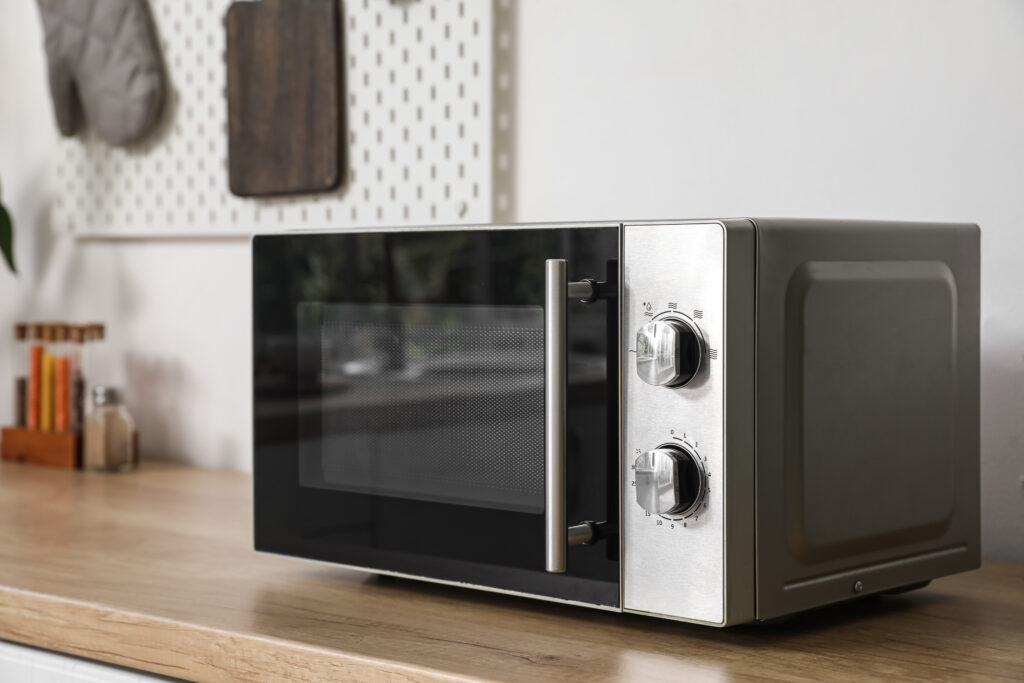
A covered dish means half the work
Before reaching for a sponge, keep the mess to a minimum. A microwave-safe dish with a food cover or lid prevents splatters on the walls and ceiling of the appliance. That’s thirty seconds saved at every meal, and hours of scrubbing avoided.
How to clean a microwave with white vinegar
This method is hard to beat: fill a bowl with one-third white vinegar and two-thirds water, then heat for 3 to 4 minutes on full power. Leave the door closed for another two to three minutes: the steam softens even the most stubborn residue. Wipe the walls with a damp sponge, and you’re done.
Lemon juice works just as well and smells better
Not everyone likes the smell vinegar leaves behind. Lemon juice does exactly the same job: one-third juice, two-thirds water, and the same heating time. You can also toss in the squeezed lemon halves. Your kitchen will smell much better.
How to use baking soda on stubborn stains
For a burnt-on splatter that won’t budge, sprinkle a little baking soda onto a damp sponge and rub gently. Its mildly abrasive action removes crusted-on food without scratching the enamel. Rinse with clean water.
Don’t forget the turntable and door seal
Remove the turntable and soak it in very hot water with dish soap. Remember the door seal and ventilation grille, too, where grease and crumbs collect. A damp cloth is enough, as long as you remember to use it.
Three mistakes to avoid
Never run the appliance empty. Avoid abrasive sponges and steel wool, which damage the interior coating. And don’t drench the walls: water must not seep into the grilles.
For lingering fish smells
Fish smells always seem to settle in eventually. Get into the habit of leaving the door ajar after use so moisture can escape. Alternatively, a saucer of coffee grounds or baking soda left inside overnight will absorb stubborn odors.
 Open Immovlan