

A basic smoke detector sounds to an empty home when you’re out. A smart model alerts your smartphone wherever you are. On paper, the choice seems obvious. But smoke detector requirements in Belgium point to a more useful upgrade, one that does not necessarily need Wi-Fi.
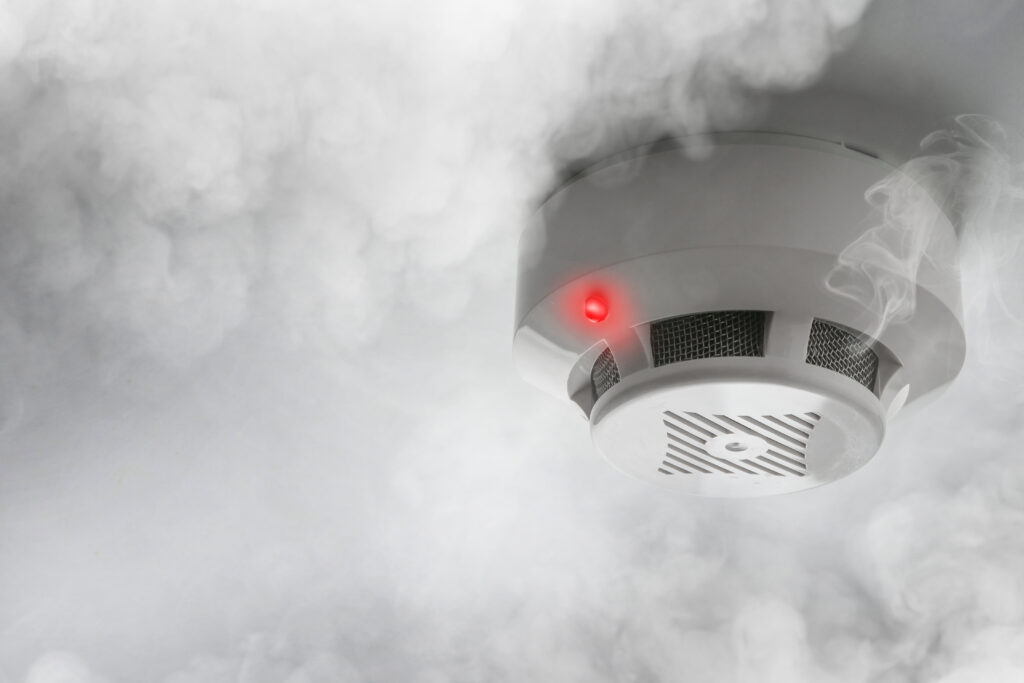
The market is divided into standalone detectors, interconnected detectors and smart detectors. They all have the same basic job: to detect smoke and sound the alarm.
In Belgium, the standard to look for is NBN EN 14604, but the precise rules vary by region. In Brussels, the detector must be optical, comply with EN 14604 and have a built-in battery with a ten-year lifespan. In Flanders, EN 14604 compliance and CE marking are mandatory, but a sealed ten-year battery is only recommended. In Wallonia, requirements include an optical detector that complies with EN 14604 and has BOSEC approval or a European equivalent. So buying a “compliant detector” already means checking the rules where you live.
Smoke detector requirements in Belgium: interconnection
A standalone detector only sounds where it detects a problem. If a fire starts in the basement while you are asleep two floors above, you need to hear the alarm in time. Interconnected models address this: when one device detects smoke, all the linked detectors sound the alarm.
In Brussels, this is no longer just a good idea. Since January 1, 2025, smoke detectors have been mandatory in all homes. If the home’s layout requires four or more detectors, they must be interconnected or integrated into a centralized detection system. However, there is a transition period for some homes that were already equipped: owners who previously had four or more standalone detectors have until January 1, 2028 to bring them into compliance.
The good news is that interconnected does not necessarily mean connected to the internet. Many models communicate directly with each other through a dedicated radio link, without an internet router, app or user account. Others can be linked by cable.
What Wi-Fi actually adds
A smart detector adds something different: remote information. When its alarm sounds, your phone can alert you while you are at work or on vacation. Some models show which device triggered the alarm, distinguish between smoke and carbon monoxide when they include both sensors, warn you when a battery is running low and let you carry out certain tests through the app.
Be careful not to assume that a connected smoke detector also detects CO. Some devices combine smoke and carbon monoxide detection; others do not. If you have a boiler, stove or another fuel-burning appliance, specifically check for CO detection rather than assuming a “smart” detector includes it.
The older Nest Protect took self-diagnostics quite far: Google advertised more than 400 automatic sensor and power checks per day. Even today, the system automatically checks its sensors, power supply and certain components at regular intervals.
What a notification cannot do
There is still one misconception to clear up. The Brussels Fire Service (Pompiers de Bruxelles) warns that in a house fire, you may have less than three minutes to evacuate. This is nothing like a movie fire that leaves you time to find the photo albums, the cat and your passport. Three minutes also gives you very little time to notice a remote notification, understand what it means and find someone who can intervene.
A notification can therefore never replace the audible alarm inside the home. It can, however, let you know sooner, allow you to call the emergency services or someone close to you, and spare you from discovering the fire several hours later. That is already useful. But the device that really protects the occupants is still the one that wakes them immediately.
The blind spot: manufacturers can switch off “smart” features
A standalone detector can work for years without a server, an app or updates. With a connected model, some functions inevitably depend more on the manufacturer. Google has provided a telling example: Nest Protect, first launched in 2013, has been discontinued commercially. Google now clearly states that the product is no longer sold, although it remains supported and existing devices continue to work.
There is an essential distinction here: this does not mean a Nest Protect becomes unable to detect a fire because Google shuts down a server. Its basic safety function remains local. It is mainly the connected services and software ecosystem that are vulnerable over the long term.
 Open Immovlan