

Give your garden a fresh look with lava rock. This increasingly popular material brings more than just a change of style. Here’s what to know.
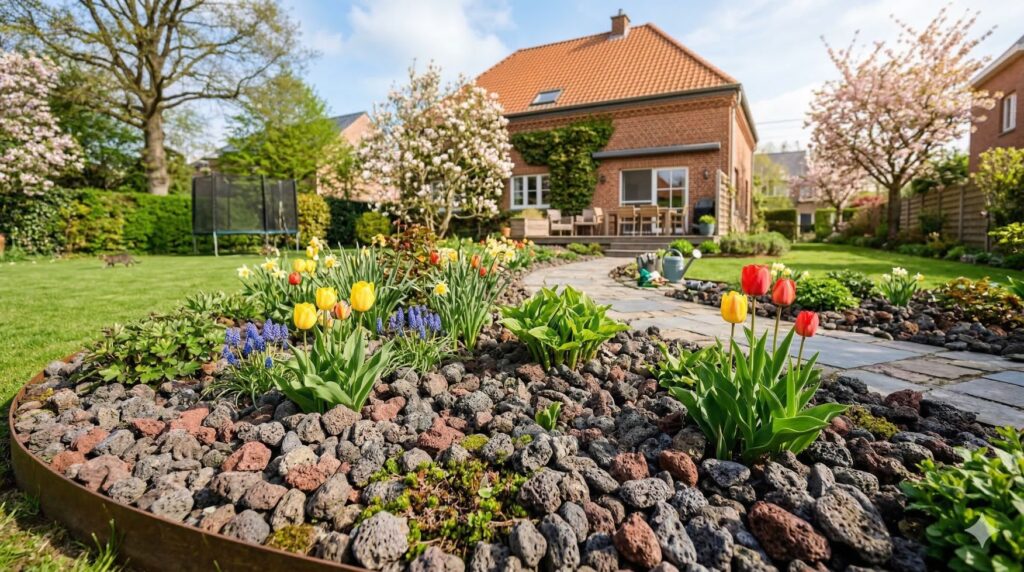
Slowly but surely, a material from deep within the earth is finding a home in Belgium’s green spaces. Lava rock for gardens, a remnant of past volcanic activity, is becoming a favorite among landscapers and amateur gardeners. Its appeal goes beyond looks, though its rough texture and shades from brown to burgundy fit current tastes. It also offers a practical alternative for anyone who has battled an invasion of horsetail or watched pine bark blow away at the first gust of wind.
Its growing popularity in flower beds comes down to durability and climate resilience, with less work for the gardener. For those hoping to reduce their carbon footprint while spending more time enjoying a drink on the terrace, lava rock has plenty of appeal.
How lava rock for gardens stores water
The explanation lies in its structure. Lava rock is porous and incredibly lightweight, formed when molten magma cools rapidly. It can absorb up to 70% of its volume in water. In Belgium’s rainy weather, that storage capacity is particularly useful. During heavy downpours, lava rock absorbs excess water, keeping your flower bed from turning into a pool.
It then gradually releases that moisture into the soil during dry spells, giving your plants a free, natural automatic watering system. This helps restore some vitality to sandy soils without requiring liters of tap water. In heavy clay soils, meanwhile, mixing in lava sand aerates the soil structure. That makes it easier for even demanding plants to take root rather than suffocate in compacted earth.
Choosing the right lava rock size for the job
Taste plays a part in choosing lava rock, but each size has its purpose. Lava sand (0/3 mm) is a versatile material for improving soil. Its fine particles work their way into small spaces, providing lasting aeration for a tired lawn.
For mulching borders, finer-looking grades such as 2/8 or the classic 8/16 are preferable. They form a compact covering that stops weeds from poking through while remaining fine enough for a neat finish.
If you dream of a swimming pond, larger lava rock (16/32) plays a central role in purifying the water. Its porous surface provides a vast housing complex for beneficial bacteria, which work day and night to remove impurities from the water. This is known as biological filtration.
Tackling horsetail and comparing costs
Field horsetail, with its distinctive “horse’s tail” appearance, is a stubborn garden invader that resists both herbicides and pulling by hand. Using lava sand as a natural weed treatment is becoming more popular in Belgium. Adding large quantities of minerals and trace elements through lava changes the soil’s composition, making it inhospitable to this prehistoric intruder.
The initial investment is admittedly higher than the cost of a bag of budget pine bark. But compare the costs over five years: bark decomposes and needs regular replacement, while lava rock lasts forever.
The drawbacks of lava rock mulch
Lava rock does have its drawbacks, starting with its rough surface. That texture deters cats from turning your begonias into a public toilet, but it can also be hard on dogs with sensitive paws. Walking barefoot on 8/16-grade rock is closer to crossing a bed of nails than taking a gentle stroll.
Lava rock also absorbs heat. That is useful for releasing gentle warmth in the evening around a fire pit, but in high summer it can stress some plants if the layer is too thick. It is also a long-term commitment: if you decide to change your garden’s style in ten years, removing tons of small stones from the soil will take more elbow grease than emptying a compost bin. Despite these drawbacks, lava rock remains an appealing option for a modern garden designed for resilience and durability.
 Open Immovlan