

Like modern kitchens, bathrooms have changed dramatically in recent years. We want them to feel elegant and comfortable, with the latest gadgets. A built-in bathtub can seem like the ultimate stylish touch. But before committing, it’s worth weighing up built-in bathtub pros and cons.
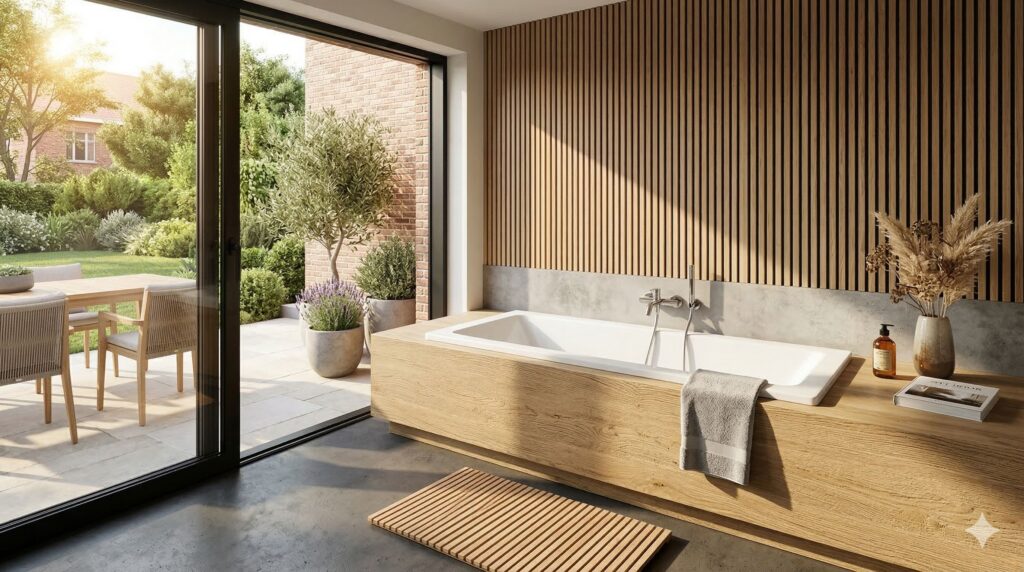
As its name suggests, a built-in bathtub is not designed to stand alone in the middle of a room. Unlike traditional models, it needs to be enclosed and integrated into a structure that fits the bathroom’s design. There are several ways to do this. The most common is a custom-built surround, finished with tile, wood, resin or another decorative material.
This freedom to choose the finish is one of the main advantages of a built-in bathtub. It lets you create a personalized bathroom that suits the style of your home. Beyond its appearance, the surround also serves a practical purpose: it conceals technical components such as pipes, fittings and drainage systems. The result is a much neater, more elegant finish.
A sunken bathtub: a striking installation
For an even more distinctive design, there is the sunken bathtub. This is built directly into the floor, creating a striking visual effect. Stepping into your bath feels like descending into a small private pool. It is hard to imagine anything more luxurious!
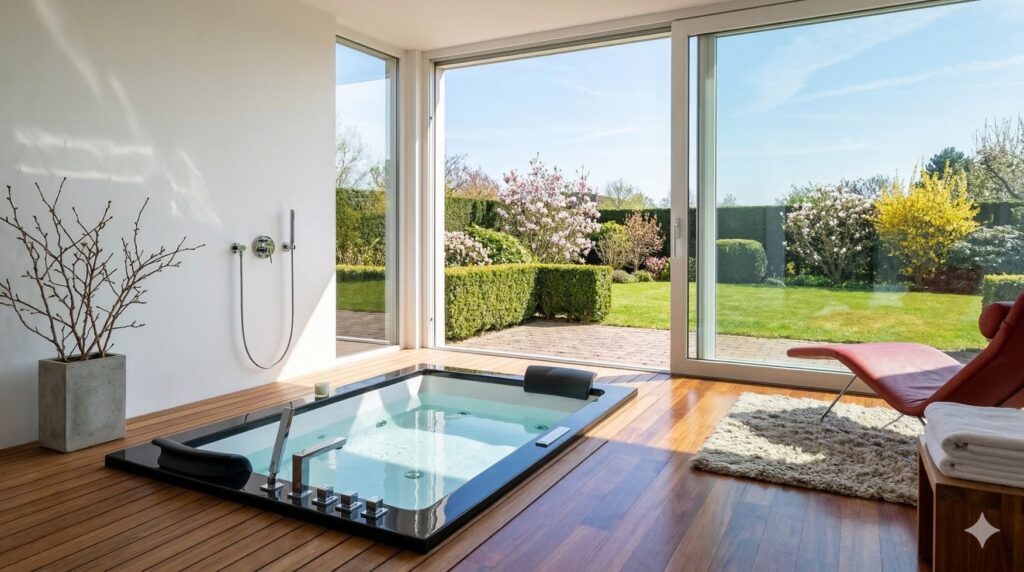
Some interior designers even install these bathtubs in unexpected places, such as a bedroom or a living room. Naturally, that means thinking through the room’s overall layout and waterproofing. The design possibilities are almost endless. As with conventional bathtubs, there is a wide choice of shapes and styles: round or rectangular, with LED lighting or hydromassage jets for a spa-like experience. Your imagination and, of course, your budget are the only real limits.
How much should you budget for installation?
Prices vary considerably depending on the model you choose and the materials used. Above all, they depend on the complexity of the work.
For a built-in bathtub, the tub itself generally costs between €300 and €1,500, depending on its size, quality and features, such as hydromassage or lighting. You then need to add the surround and faucets, along with professional installation. A complete project often comes to between €1,000 and €5,000, or more for high-end finishes. The total also depends on whether you do the work yourself or hire a professional.
A sunken bathtub is a more ambitious project. The work required in the floor, including structural work, drainage and access for maintenance, can quickly push up the budget. The tub itself can cost between €800 and €3,000, but installation work can easily go beyond the €3,000 to €6,000 range, depending on the house’s layout.
In a new build, these costs can be easier to control because the technical installations are planned from the outset. In a renovation, however, the adaptations needed can make the project much more expensive, or even financially unworkable. It really does depend on the individual project.
Built-in bathtub pros and cons to consider
Installing a built-in bathtub generally takes a little more work than installing a conventional tub. Building the surround requires some expertise, as do integrating the faucets and completing the finishes. Still, the work is entirely feasible if your bathroom has enough space for this type of installation.
A sunken bathtub, on the other hand, brings much greater constraints, especially during a renovation. You need to plan the water supply, drainage, access to an inspection hatch for maintenance and the built-in faucets. In some situations, such as a renovation, the solution is to build a raised platform around the bathtub to make the technical installation easier. In practice, though, this brings the design closer to a conventional built-in bathtub with a larger surround.
Think about everyday use, too. If you need to bathe young children, for example, a bathtub at floor level can soon become harder on your back. And if something goes wrong, repairs will probably be considerably more complicated than with a traditional bathtub.
Hiring a professional is often the best option
To avoid unpleasant surprises, it is strongly recommended that you hire a bathroom specialist. A professional can assess your space and its technical constraints, then suggest the most suitable solution for your budget.
For this type of project, labor and installation work often account for most of the cost, rather than the bathtub itself. Done well, though, the installation can genuinely add value to your home and turn your bathroom into a spa-like place to relax. You may not recoup your investment, but the enjoyment may be your main reason for doing it.
 Open Immovlan