

If you’re exploring how to restore old wooden furniture, gentle abrasive blasting is an option to consider. This technique is increasingly used to renovate and refresh surfaces such as furniture, doors, stairs and even some floors. It removes old finishes, leaving a clean base ready for you to refinish as you wish.
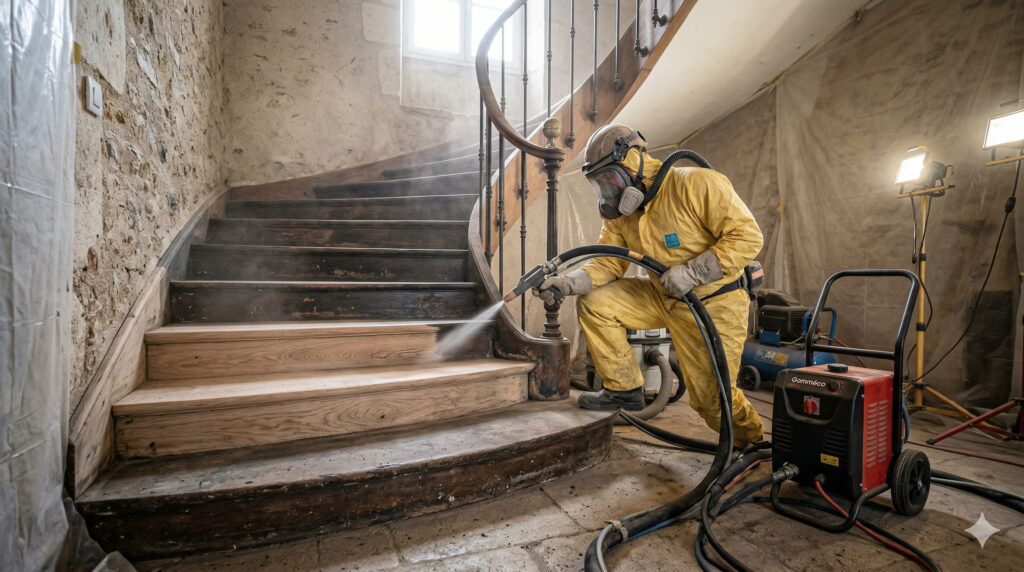
Gentle abrasive blasting (aérogommage) is a gentle stripping method. The aim is to get a material as clean as possible without damaging it. It is mainly used on wood, but it can also suit metal and stone, depending on the surface and the abrasive chosen.
The principle is simple: compressed air propels a very fine abrasive at low pressure. This removes layers of paint, varnish, wax or other old finishes while preserving the original surface as much as possible. The process is precise enough to work on both large surfaces and detailed areas, such as moldings or hard-to-reach corners.
How to restore old wooden furniture with a gentle touch
One of the main benefits of gentle abrasive blasting is its non-aggressive approach. Unlike harsher methods, it does not needlessly damage the material when carried out correctly. The surface therefore retains more of its natural appearance, which is particularly useful for antique objects or features you want to restore with care.
Another advantage is that, once stripping is complete, it is easier to apply a new finish. Paint, oil, wax, varnish or a protective treatment generally adheres better to a clean, well-prepared surface.
An accessible and often cost-effective option
Gentle abrasive blasting is often considered an affordable option, particularly because it can save time on some projects. The cost naturally depends on several factors: the size of the surface, its condition, the level of detail involved and the material being treated.
For a small piece, the cost can remain very reasonable. Larger or more complex surfaces take longer to treat, and the price rises accordingly. You can do it yourself, but you need suitable equipment (which can be rented), the right pressure setting and at least some practical know-how. Poor handling can leave marks on the surface or produce an uneven result! It is best to be cautious, especially with fragile or valuable pieces.
Which materials can you use it on?
Gentle abrasive blasting can produce very good results on different materials:
- Wood: ideal for removing varnish, wax or paint from furniture, doors, beams or stairs. It leaves the wood looking more natural and more uniform.
- Metal: useful for removing certain old finishes, preparing for repainting and limiting the appearance of defects before treatment.
- Stone: can be suitable for cleaning or stripping some surfaces, provided the method is carefully adapted to avoid weakening the material.
This versatility explains why the technique is used for both interior renovation projects and the restoration of decorative objects or more functional components.
A cleaner, more environmentally friendly method
Gentle abrasive blasting also appeals because it is more environmentally friendly than some chemical methods. It does not rely on aggressive chemical strippers, which limits the use of harmful products and makes the work more pleasant to manage. You still need to take precautions, but this is a real advantage for many projects.
When is it a good option?
If you want to restore the character of old furniture, update interior doors, renovate a wooden staircase or prepare a surface for a new finish, gentle abrasive blasting can be an excellent option. Its precision and effectiveness, combined with its flexibility, allow you to achieve a clean result without being overly harsh on the surface.
 Open Immovlan