

No more spoiling your facade! Reversible air conditioning without an outdoor unit promises almost all the benefits of a system with an outdoor unit, without the hassle of that external equipment. Here’s how it measures up.
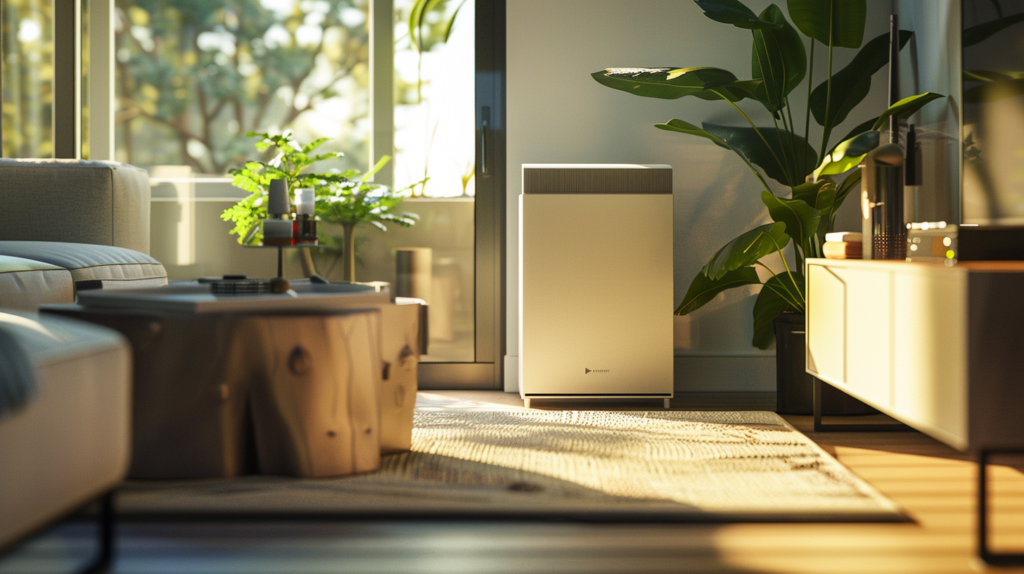
How air conditioning without an outdoor unit works
These systems really do exist, and they’re not science fiction. Heat pump air conditioning without an outdoor unit, often called a reversible monobloc air conditioner, brings together in one indoor unit the functions normally shared between indoor and outdoor units.
The appliance mounts on the inside of an exterior wall. It draws in air, transfers heat, then expels hot or cold air through two ducts fitted through holes in the facade. In summer, it cools the room; in winter, it can provide heating. Some models also offer ventilation or dehumidification.
The main selling point is clear: no visible outdoor unit. That’s an appealing prospect for apartments, buildings with heritage-listed facades or co-ownerships (copropriétés) that are reluctant to accept outdoor air conditioning units.
The real advantage: an unobtrusive appearance
The main appeal is how little you see from outside. While a split air conditioning system needs an outdoor unit mounted on the facade, on a balcony or in a courtyard, a monobloc system generally needs only two discreet grilles.
Another advantage is that installation is generally simpler than for a split system. There’s no refrigerant connection between two units and no bulky outdoor unit to position. In practice, the main tasks are choosing the location, drilling the duct openings correctly, providing condensate drainage and sealing everything properly. It’s not quite “two holes and you’re done,” but it’s not an endless building project either.
Heat pump technology offers some efficiency
Technically, this is a reversible air-to-air heat pump. The principle is familiar: rather than generating heat with an electric resistance element, the appliance transfers heat from one side to the other. In heating mode, it takes heat from the outdoor air and brings it inside. In cooling mode, it does the reverse. That makes its efficiency attractive, but a monobloc without an outdoor unit doesn’t always match the performance of a good split system.
The downside: indoor noise
The weak point is the noise level. In a conventional split air conditioner, the noisiest components, including the compressor, are outside. In a system without an outdoor unit, everything sits inside the indoor casing. In short, the noise is indoors.
Some newer models claim reasonable noise levels, sometimes comparable to a quiet conversation, according to the brands. But in a bedroom at night, your tolerance for a steady hum can quickly wear thin.
Which rooms are suitable?
Reversible air conditioning without an outdoor unit is most useful for a specific room: a bedroom, office, studio apartment, small living room, professional consulting room, extension or a home where an outdoor unit cannot be installed. It’s less suitable if you want to cool an entire house or a large apartment.
The area it can serve depends on the unit’s capacity, sun exposure, the volume of space to heat or cool, the quality of the window frames, insulation and the number of occupants. A room directly beneath the roof requires a different level of effort from a well-insulated office with external blinds.
Location matters too. The monobloc must be mounted on an exterior wall, because its ducts need to connect to the outdoors. That limits your installation options.
How much does it cost?
Prices vary considerably depending on the brand, capacity, options and installation. Some models cost around €1,000 to €1,500, while higher-end systems can exceed €2,000. You’ll also need to budget for installation.
A portable air conditioner costs less, but it’s often noisier and less efficient, and it requires a hose through a window. A conventional split system generally performs better, but it’s more visible and harder to get accepted. The monobloc sits somewhere between the two.
 Open Immovlan