

With the current heat wave, air conditioning is getting more attention than ever. For the vast majority of people, it is presented as a machine that cools the air. But manufacturers now promote air conditioning health benefits, too. Their pitch goes beyond “cold air” to indoor comfort, air quality, filtration, humidity control and monitoring through an app. Let’s look at how those claims hold up.
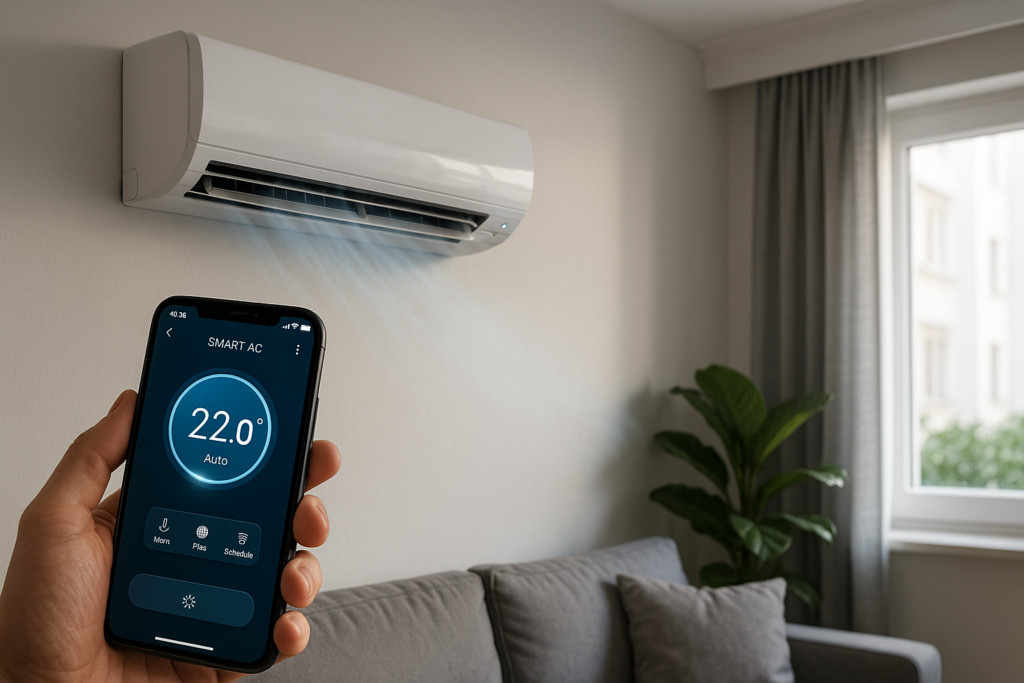
Manufacturer LG explains that electrification, new refrigerants, connected systems and growing attention to indoor air quality are currently driving the sector.
Of course, by cooling your home, air conditioning can transform daily life during a heat wave. Heat can become a health risk, especially for older people, children and people who are ill or isolated. You probably know that already, but cooling is not its only benefit.
Air conditioning health benefits: humidity matters too
Belgium’s Federal Public Service for Health (SPF Santé publique) points out that excessive humidity encourages mold, which can irritate the airways. A correctly sized air conditioner can help dehumidify the air. But if your home has an underlying damp problem, air conditioning clearly will not fix the cause. It can, however, help with condensation problems. Watch out for the opposite issue, too: air that is too dry is not ideal for your airways either.
Filtration, pollen and purification: claims to check
New units often advertise filters that capture dust, pollen, fine particles or allergens. There are real benefits here, but, as always, the claims need some qualification.
The US Environmental Protection Agency (EPA) explains that filtration systems and air purifiers can improve indoor air quality by capturing some airborne particles. These include fine particles: tiny specks of dust invisible to the naked eye that can penetrate deep into the airways.
Some highly effective filters, known as HEPA filters, can trap a large proportion of these particles. Studies cited by the EPA even show small benefits for breathing or cardiovascular health in some cases. That certainly does not mean an air conditioner becomes a medical device.
The main point remains: filtering the air is not enough. You also need to limit sources of pollution in your home, including cigarette smoke, scented candles, air freshener sprays, harsh cleaning products, damp and mold, accumulated dust and poorly ventilated cooking appliances. Proper ventilation and maintenance of your unit also matter. An air conditioner with a filter can help you breathe more easily, but it cannot replace good ventilation or a healthy home.
Another area where caution is needed is ionization and certain “plasma” or UV technologies. The EPA advises avoiding devices that intentionally produce ozone, because ozone irritates the lungs. In plain English: if a unit promises to “purify” the air using futuristic-sounding terms, read the technical specifications before reaching for your credit card. In this particular case, AI can help you with a neutrally worded prompt.
Ventilation remains essential
Air conditioning can filter, cool and dehumidify the air. But it cannot replace fresh air. It bears repeating, and Belgium’s Federal Public Service for Health recommends it too: you need to air out your home for 15 minutes twice a day and maintain your ventilation systems.
Maintenance matters
Finally, there is another essential point: maintenance. A technician from Daikin told us that he serviced only a very small proportion of the heat pumps he installed. Yet cleaning the filters and carrying out a general checkup are essential for air conditioners to work properly, and for your health.
 Open Immovlan