

Belgian and Dutch experts warn: good insulation and a heat pump are not enough to keep you cool. Heat pump cooling needs a whole-home approach.
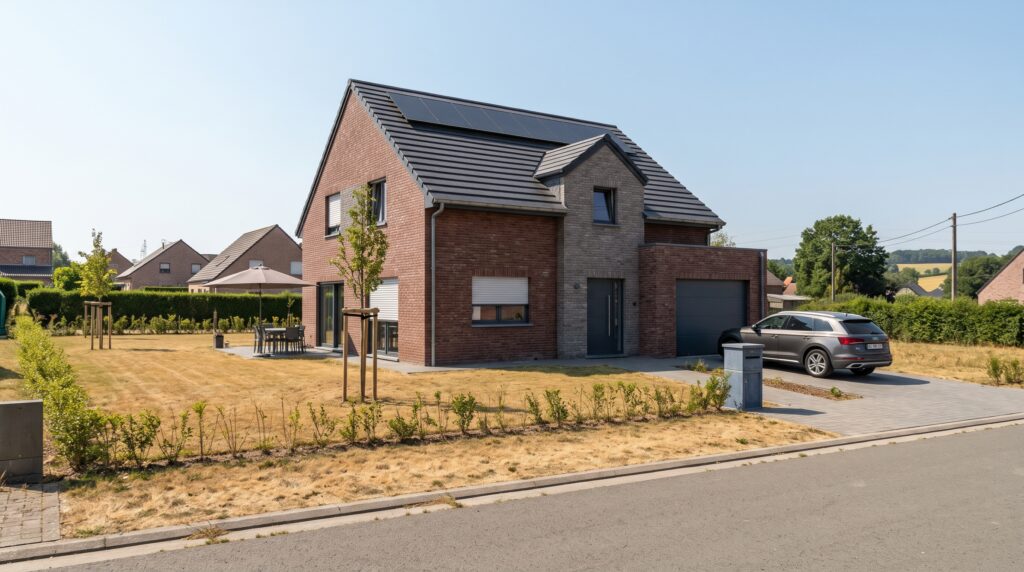
Your home is new, carefully insulated and fitted with a state-of-the-art heat pump. Everything seems perfect until the first spell of hot weather makes the bedrooms unbearable. You end up installing air conditioning you had never planned for. That is the trouble with these highly insulated modern homes: once heat gets in, it struggles to escape. Hardly what you might expect from a passive house. Some of you may recognize this scenario, which Belgian and Dutch specialists discussed at a roundtable convened by Jaga, reported on by Architectura on November 13. Their message was clear: good equipment cannot always make up for poor overall design. And even in 2026, poor design is far from rare.
Heat pump cooling starts with the whole building
When building or renovating, you may be tempted to start by choosing your heating equipment. The speakers recommend reversing that approach: assess the building envelope, windows, solar shading and radiators or convectors, then size the heat pump. An oversized unit may operate less efficiently, while an unsuitable heat distribution system limits performance.
In a renovation, the condition of the pipework matters too. Switching from a boiler to a heat pump without assessing the rest of the system risks driving up costs and leaving you disappointed. The energy performance certificate (certificat PEB or EPC) offers some guidance, but it cannot replace a proper assessment of comfort and system sizing.
Cooling without a wall-mounted unit
The specialists recommend a common-sense order of priorities: first keep the sun out, then make use of ventilation and nighttime cooling. Only after that should you turn to mechanical systems. External shading and the building’s orientation naturally play a major role.
When active cooling is necessary, it can use a water circuit and emitters designed to operate in cooling mode. Some reversible convectors can cool rooms without a conventional wall-mounted air-conditioning unit. Underfloor cooling is another option, though its cooling capacity has limits.
 Open Immovlan