

Advice on how to reduce indoor humidity often goes like this: “Yes, some plants retain water and naturally dehumidify your home.” It sounds appealing and natural, and this tip has been circulating for 20 years. The only problem is that botany says pretty much the opposite!
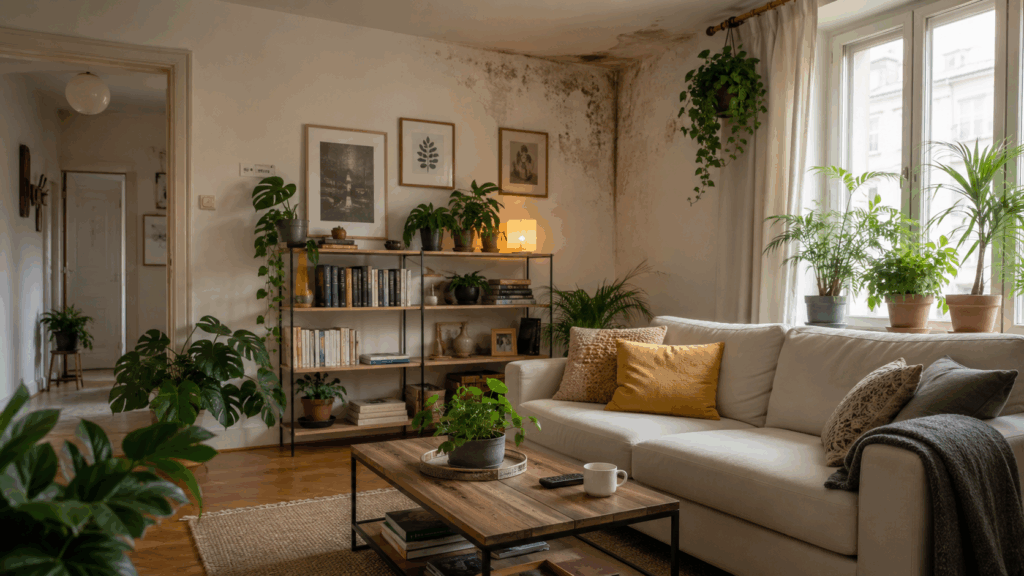
Damp homes are a real problem in Belgium. According to IWEPS, 17.6% of people in Wallonia live in a home with a damp problem. In Brussels, the proportion is between 20 and 25%. Flanders fares better, at slightly above 10%. By European standards, Wallonia is among the poorer performers.
Behind those percentages are mold, dust mites, damage to buildings and a higher risk of respiratory problems. Tackling them takes more than a terracotta pot on the edge of the bathtub.
What a plant does with the water you give it
The process is taught in high school and leaves little room for doubt: roots absorb water, it moves through the plant, and the stomata (tiny openings found notably on leaves) release some of it as vapor. This is called transpiration.
The result is straightforward: a large share of the water a plant absorbs returns to the atmosphere through transpiration. Indoors, a houseplant therefore acts more like a small source of humidity than a dehumidifier.
No, leaves do not suck moisture out of the air
This is the big claim behind the lists circulating online. Yet the vast majority of houseplants absorb water mainly through their roots. Their leaves lose water to the air through transpiration.
Some plants are exceptions. Tillandsias, for example, have specialized trichomes that allow them to capture moisture from sources including rain, mist and fog. That does not make them dehumidifiers capable of drying out a room.
Why the myth persists
There is some genuine observation behind it. Spathiphyllum, Boston ferns and areca palms do like humid environments and can thrive in a bathroom with enough light. Some people have taken this to mean that the plants are “working” there. In reality, they are mostly benefiting from those conditions.
Another theory circulating online stems from a 1989 NASA study on plants and indoor air quality. Conducted in controlled experimental environments, it looked notably at removing volatile organic compounds, not dehumidifying a home. Confusing “purifying” with “drying” did the rest.
How to reduce indoor humidity effectively
A household of four can produce 10 to 15 liters of water vapor every day through showering, cooking, washing and drying laundry, breathing and other activities. A few plants cannot offset that volume. Removing this moisture means, above all, ensuring that the air in your home is properly replaced with fresh air.
Air out your home regularly by opening the windows wide, never block ventilation grilles, use a range hood that vents outdoors when cooking, dry laundry outside or in a properly ventilated room, and keep the temperature reasonably consistent throughout your home. These measures work.
If humidity remains abnormally high despite proper ventilation, the cause may lie elsewhere: rising damp, a thermal bridge, water ingress or a ventilation defect. In that case, you are better off getting a professional diagnosis than relying on a gardener.
If you are wondering how to measure humidity at home, the first useful purchase generally costs very little: a hygrometer. Place it in different rooms for a few days at a time to monitor relative humidity. A reading of around 40 to 60% is generally a good reference range for a home.
 Open Immovlan