

Contractor damage liability in Belgium depends on the contract, the information available to the contractor and the precautions they took. If they accidentally damage an electrical cable, gas pipe or water pipe while working on your home, those factors determine whether they can leave you to pay for repairs.
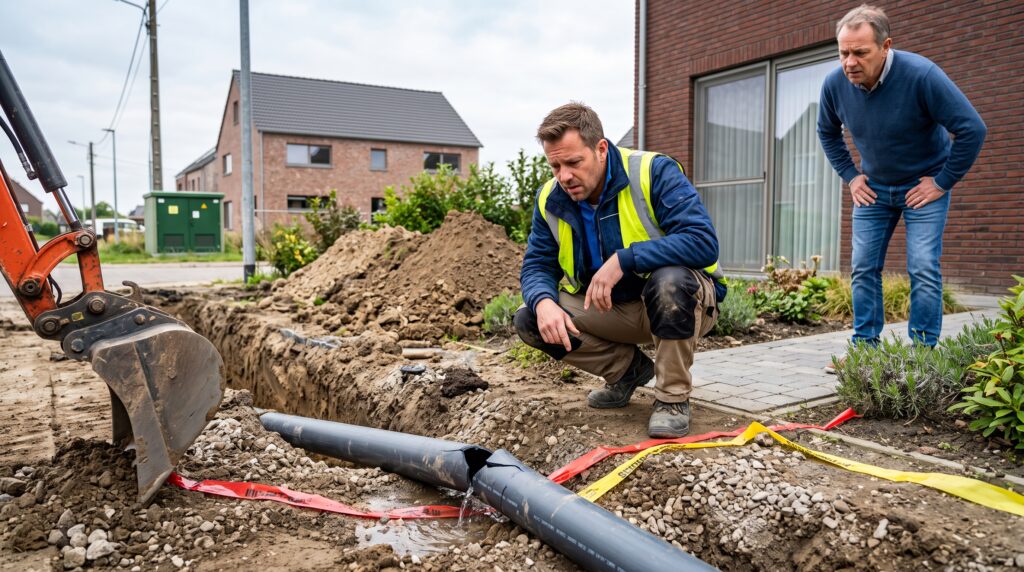
A shovel hitting a pipe, a cable torn out while digging in the garden or a sewer damaged during building work: these accidents happen more often than you might think. Repairs can quickly become expensive, not to mention the inconvenience if the water, gas or electricity has to be shut off. Your contractor might argue that they could not have known there was a pipe in that spot and that you should pay the bill. Do not accept that answer without checking what happened.
Contractor damage liability in Belgium: check the contract
The contract you signed with your contractor, or their general terms and conditions, may specify who is responsible for damage to cables and pipes. For example, it may make you responsible if an installation is damaged and you were supposed to tell the contractor where it was.
A clause like this clearly has consequences, but it does not give the contractor a free pass. They may have been seriously negligent, for example by starting to dig with a large machine without seeking any information about existing pipes. In short, if a clause in the contract unfairly excludes their liability, you can challenge it.
For excavation work in the Flemish Region, requesting plans through KLIP is mandatory. This gives access to the available information about underground pipes and cables in the area concerned. Work must start within 40 working days of the request, and the contractor must wait until the plans have arrived before digging.
When the contract says nothing
Your contractor may expect you to point out any pipes whose location you know, both inside and outside the house. If you give them incorrect information and that information leads to the damage, you may be held liable.
For their part, the contractor must seek information before starting work and proceed carefully. If they ask you no questions, fail to request the necessary plans or dig carelessly where pipes are likely to be, you could claim the repair costs from them.
If you disagree over who should pay, review the contract and your communications before the work began: who knew what, which plans had been requested and how was the work carried out?
 Open Immovlan