

Belgian landscape designers make a simple case for garden design before building a house: water, soil and trees should be part of the project from the first sketch. This is not about putting a pretty garden with a lovely oak tree ahead of a welcoming kitchen. The point is rather more practical.
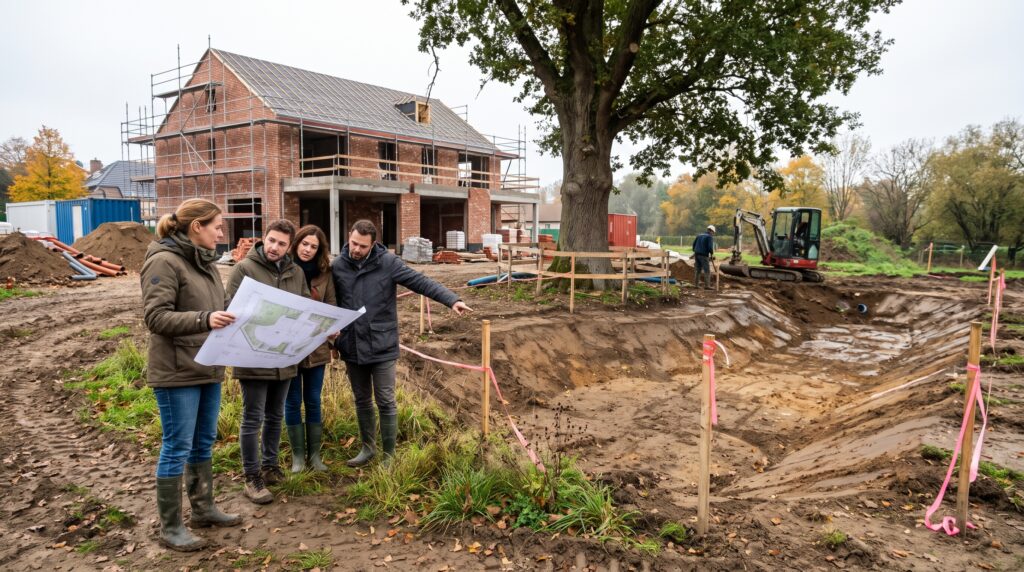
Traditionally, outdoor design comes after the building: you finish the house, then choose a patio, two trees and a few ornamental grasses to make it look nice. A video published by Architectura argues for the opposite approach. Three Belgian specialists explain why water, vegetation and soil should be considered from the earliest design stages.
The idea is not really to treat the garden as more important than everything else, but to see the outdoor space as climate infrastructure.
Garden design before building a house starts with water
For an individual home, the first question is very practical: what happens to the rain that falls on your plot? An impermeable patio, a concrete driveway and a roof can send a lot of water into the sewer in just a few minutes. A garden that allows some of this rain to soak into the ground or holds it back reduces local runoff and eases pressure on the drainage network during heavy downpours. That also reduces the risk of flooding, no small benefit given the weather in recent years.
Solutions range from a simple, slightly sunken planted area to underground systems. We have already explained how rainwater infiltration crates work. Bear in mind, though, that soil type makes a huge difference: clay soil does not absorb water like sandy soil, while a high water table can limit certain options.
Shade helps, but it is no substitute for air conditioning
The second consideration is shade. A well-placed tree can reduce solar heat gain through a large window or on a patio in summer, while letting more light through when it loses its leaves in winter. A tree alone obviously cannot replace properly sized solar shading, but it can help keep your home comfortable in summer while improving biodiversity.
Vegetation also affects local temperatures through evapotranspiration. For a 200 m² garden, though, do not expect the miraculous figures sometimes shared on social media. The effect depends on many factors, including soil type. Still, small contributions add up.
Biodiversity: beware of ideas that only sound good
You may be tempted to let everything go and create a natural garden. It is an appealing idea, but that does not mean abandoning all maintenance. Certain invasive species can cause problems, and planting must remain compatible with neighboring properties. As we recently pointed out, garden maintenance can become an obligation in some situations, particularly when a garden causes a nuisance or a tenant has maintenance responsibilities.
The garden as part of the building
Give it 5 minutes of thought and this approach may seem less radical than it first appears: before choosing the finishes, you need to understand the site. Where are the wet areas? Which direction does the wind come from? Which rooms are likely to overheat? Which trees are worth keeping? Where can rainwater go without ending up in the basement?
For a new build, working these answers into the design early can avoid expensive changes later. An existing home is another matter, of course, but you can make gradual improvements: remove impermeable surfacing from part of the driveway, plant for shade, collect more rainwater or adjust the garden’s slopes. Time to get to work!
 Open Immovlan