

Tiles are one of the most widely used floor coverings in our homes. Hard-wearing, durable and relatively easy to maintain, they suit many spaces, from kitchens, bathrooms and living rooms to entrance halls and terraces. But not all tiles have the same characteristics. Knowing how to choose floor tiles means understanding the differences between terracotta, natural stone, porcelain and cement.
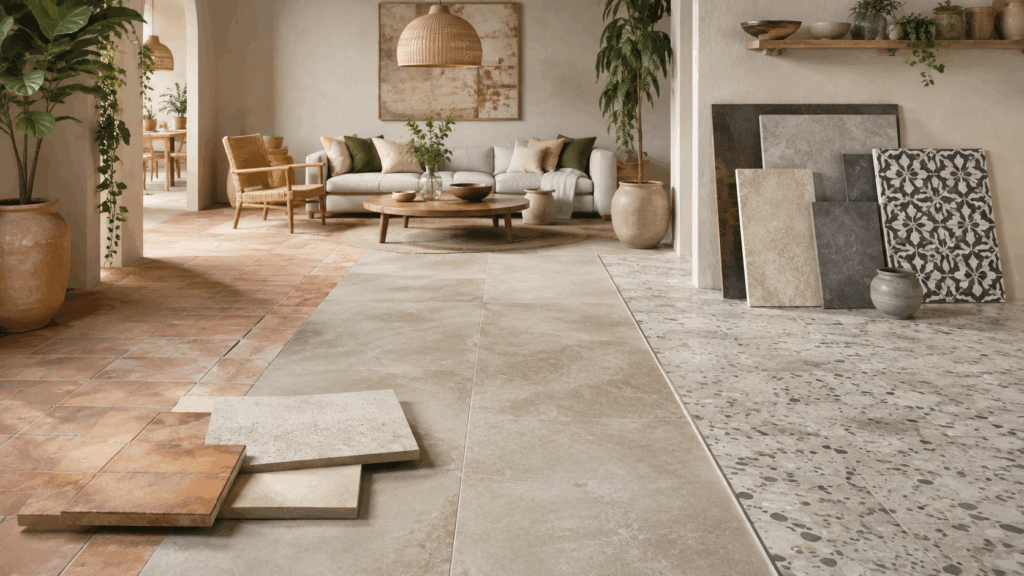
1. Terracotta floor tiles
As the name suggests, terracotta tiles are made from fired clay. They are particularly common in character homes and southern regions, with the famous Provençal terracotta tiles known as tomettes.
Their main appeal is their natural appearance. Tiles often have slight variations in shade and develop an attractive patina over time. Terracotta brings plenty of warmth to an interior and works particularly well with rustic, Mediterranean or traditional styles.
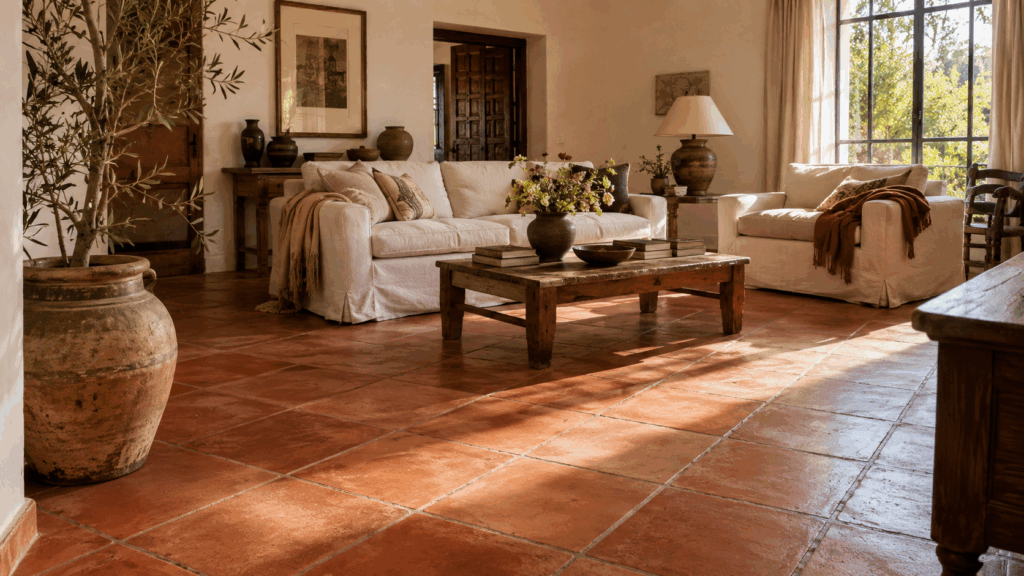
The downside is that terracotta is relatively porous. It can be vulnerable to stains, moisture and certain cleaning products. You will therefore generally need to apply a protective treatment after installation and renew it when necessary.
Advantages: warm appearance, authentic charm and an attractive patina as it ages.
Disadvantages: more demanding maintenance, susceptibility to stains and durability that varies from product to product.
2. Natural stone floor tiles
Common in older buildings, natural stone tiles also work well in modern homes. Each stone has its own colors, veining and irregularities, creating a unique floor.
Several materials are available. Granite is valued for its strength. Marble appeals for its elegance and varied veining. In Belgium, blue limestone also remains very popular, both indoors and for certain outdoor uses.
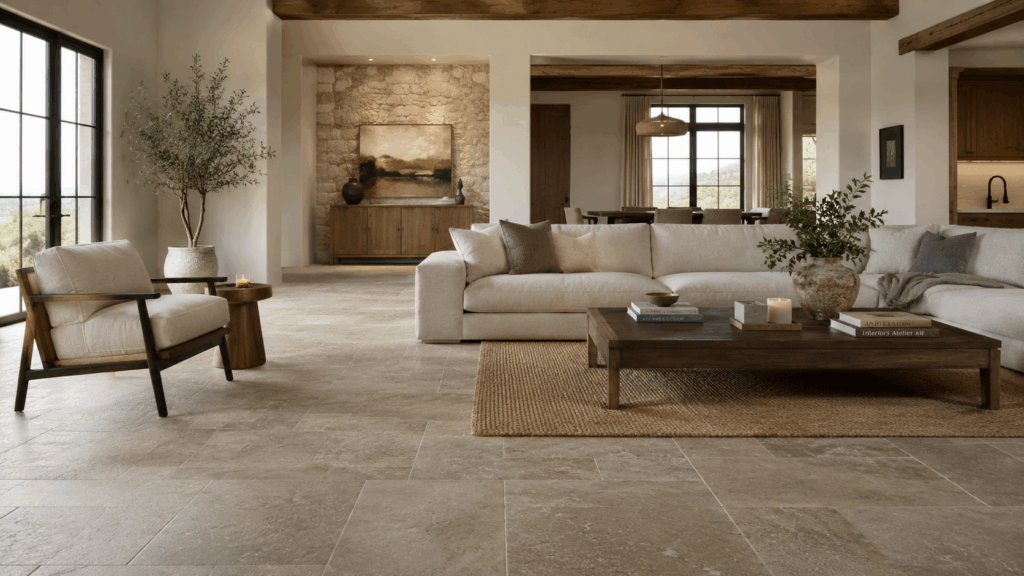
Natural stone is generally durable, but it can require more maintenance than manufactured tiles. Some stones are porous and need a water-repellent or stain-resistant treatment. Calcareous materials, including certain marbles, are also sensitive to acidic products.
You also need to consider price and weight. Slabs can be thick and heavy, which can make installation more complicated, particularly when renovating an upper floor.
Advantages: a natural material, a high-end appearance and a long lifespan.
Disadvantages: a higher price, specific care requirements and sometimes more complex installation.
3. Porcelain floor tiles
Porcelain tiles are now one of the most common choices for home flooring. Made from clay and other mineral materials fired at high temperatures, they are particularly dense and hard-wearing.
There are several varieties, including glazed porcelain, through-body porcelain and color-body porcelain. Overall, these tiles are valued for their low porosity, resistance to wear and ease of maintenance.
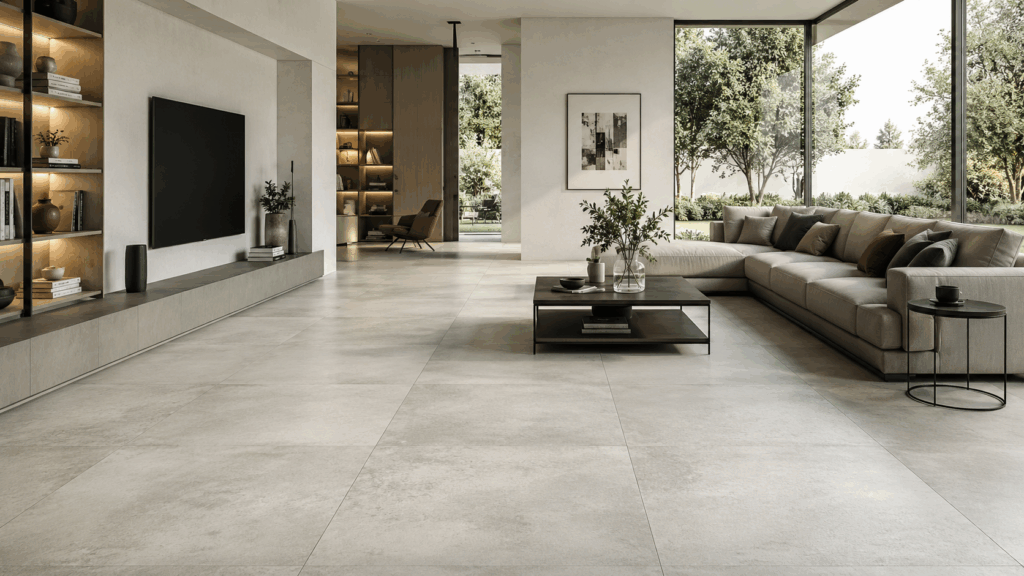
Porcelain also offers a huge range of design possibilities. It can closely reproduce the appearance of wood, marble, natural stone, concrete or terrazzo. This lets you enjoy the look of a natural material while keeping your floor easier to maintain.
It is a particularly good option for kitchens, bathrooms, entrance halls and living spaces.
Advantages: very hard-wearing, easy to clean, available in many sizes and finishes, and excellent value for money.
Disadvantages: some high-end models can be expensive, and large-format tiles require very precise installation.
4. Cement floor tiles
Cement tiles have made a strong comeback in interior design. Popular for their colorful, geometric or retro patterns, they can give a kitchen, bathroom or entrance hall plenty of personality.
Unlike terracotta tiles, they are generally not fired. Their surface is porous, however, and needs protection against stains.
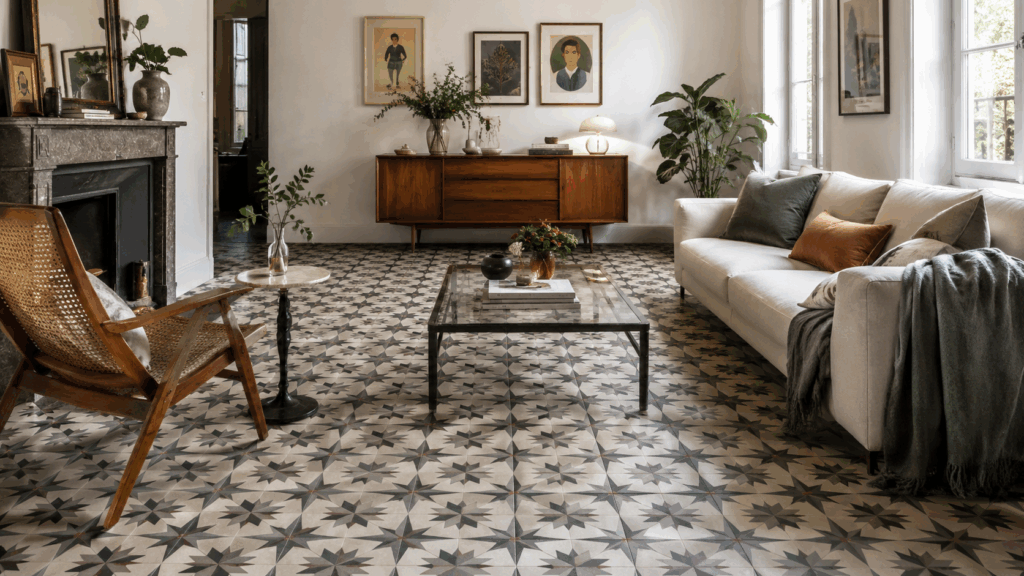
Genuine cement tiles can also be relatively expensive. For the same look with fewer practical demands, there are now many porcelain tiles that imitate cement tiles.
How to choose floor tiles for each room
Your choice depends mainly on where the flooring will be installed.
In a kitchen, prioritize a material that resists stains and is easy to wash. Porcelain is therefore particularly suitable.
In a bathroom, pay attention to moisture resistance as well as how slippery the tiles are. A slip-resistant finish is often preferable for the floor.
In a living room, the choice is primarily about appearance. Natural stone, terracotta or parquet-effect porcelain can all work well.
For a terrace, you must choose tiles specifically designed for outdoor use, capable of withstanding frost, weather and temperature changes.
Other factors to consider
Material is not the only consideration. You also need to take account of tile size, finish, resistance to wear and ease of maintenance.
Large tiles generally create a more contemporary feel and reduce the number of visible grout lines. However, they require a particularly flat base for installation.
Think about underfloor heating, too. Tiles, particularly porcelain and stone, transmit heat very well, making them especially suitable for this type of system.
The best floor tiles for your needs
No single type of tile is ideal for every situation. For a versatile, hard-wearing and easy-care option, porcelain generally remains the most practical choice.
Terracotta stands out for its authentic character, while natural stone suits those looking for a premium, durable material. Cement tiles are ideal for adding a distinctive decorative touch.
Before choosing, compare not only price and appearance, but also how the room will be used, maintenance needs, durability and installation requirements.
 Open Immovlan