

If you’re cold or fed up with your heating, storage heaters could offer a solution. But weigh up these storage heater pros and cons before expecting miracles.
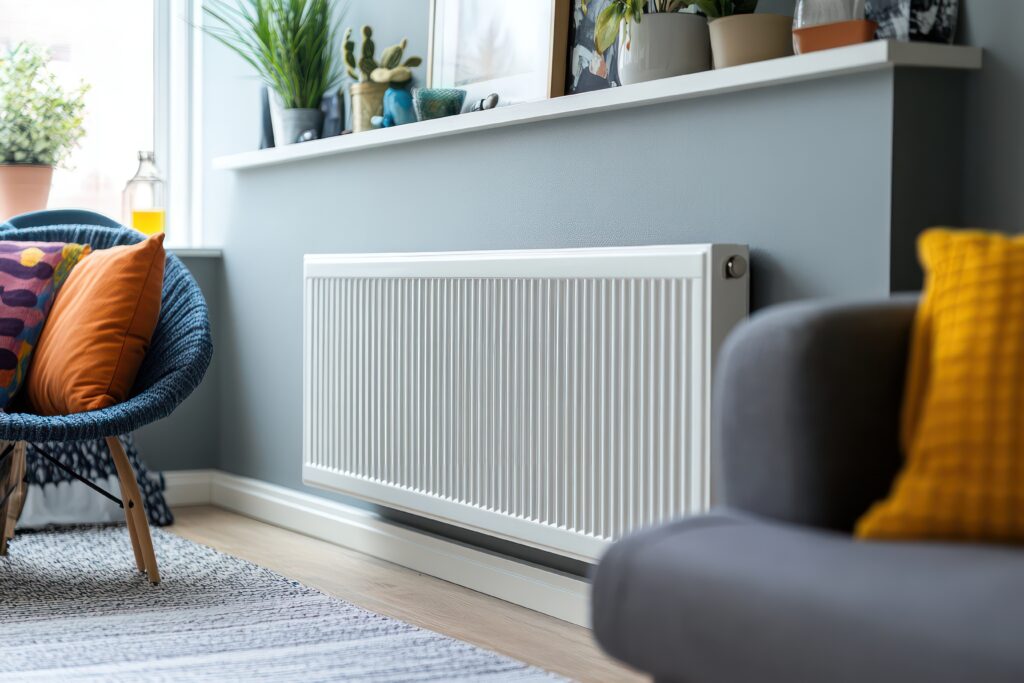
How do storage heaters work?
A storage heater stores heat, ideally during off-peak hours when electricity is cheaper, then releases it slowly throughout the day. In other words, it works overnight to keep you comfortable during the day without using electricity at the most expensive rates.
The heat is stored in materials with high thermal inertia, such as brick, stone or cast iron. Think of them as miniature stoves that hold on to heat for hours.
Good to know: to get the most out of a storage heater, a dual-rate electricity meter (compteur bi-horaire) is preferable.
Storage heater pros and cons: the benefits
- Economical when used properly: by heating only during off-peak hours, you can reduce your bill without sacrificing comfort. That means programming it carefully.
- Gentle, enveloping warmth: unlike conventional convector heaters, storage heaters provide even heat that doesn’t dry out the air or create drafts.
- No noise, no stress: once programmed, it works silently. No fan noise or crackling.
- Modern, connected models: some storage heaters now have smart controls, allowing you to control them from your smartphone and adjust them remotely to suit your routine.
The drawbacks you shouldn’t overlook
- Not suited to last-minute heating: these heaters won’t warm a room right this instant. They are slow to heat up, although some models have a supplementary electric heating element or a built-in fan to speed things up a little.
- Bulky and heavy: these are large appliances, and particularly heavy ones. Moving one on your own isn’t easy.
- A substantial upfront cost: prices range from a few hundred euros to €2,500 for the best-performing models. You may also need to add installation costs.
- A dual-rate meter: this type of heating is considerably more economical when connected to a dual-rate meter. It heats up during off-peak hours, then releases its stored warmth when electricity is charged at the full rate.
- Time-consuming programming: getting the programming right is essential for the system to work at its best. That process can quickly become tedious, especially with budget models that don’t have an app.
Who are storage heaters really suited to?
One thing is certain: nothing really replaces good insulation. Once your home is properly insulated and, ideally, has solar panels on the roof, a heat pump remains the best option. A storage heater is better viewed as a supplementary heating solution for certain well-insulated rooms where installing a heat pump would be too complicated or expensive.
 Open Immovlan