

A few kilometers from Montpellier, among vineyards and centuries-old oaks, an 18th-century chateau has been given a new lease on life. There is no flashy makeover or ostentatious luxury here. Instead, sustainable interior design takes its cue from materials and a long-term approach.
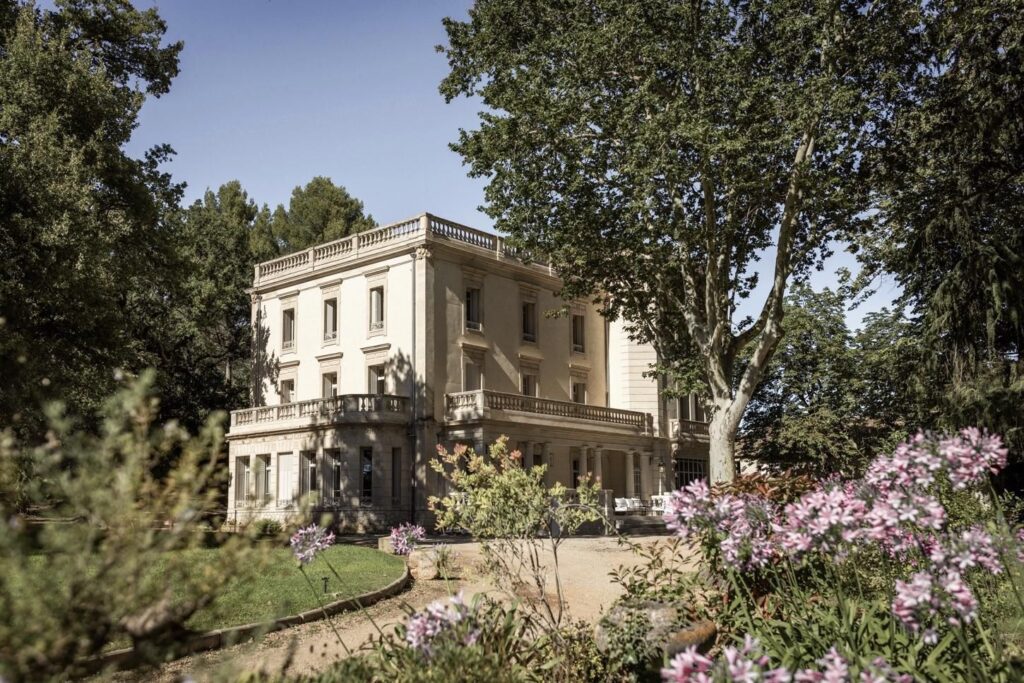
The challenge was to turn a historic residence into a contemporary hotel without freezing it in time or stripping away its character. Each room was designed in direct relation to its surroundings. Natural light enters, moves through the rooms and changes throughout the day. According to the studio behind the project, the materials (stone, wood and fabrics) respond to that light, bringing the spaces to life.
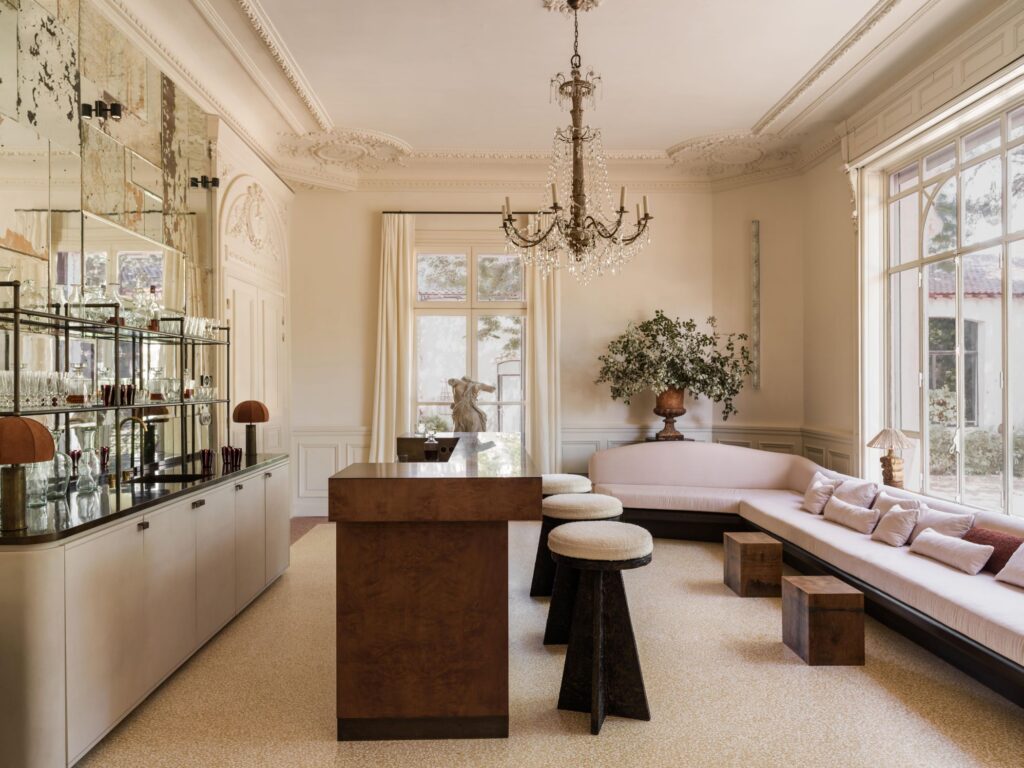
Nothing feels static. The decor lives, breathes and changes with the hour and the season. It feels more like a lived-in home than a conventional hotel.
Textiles take the lead in sustainable interior design
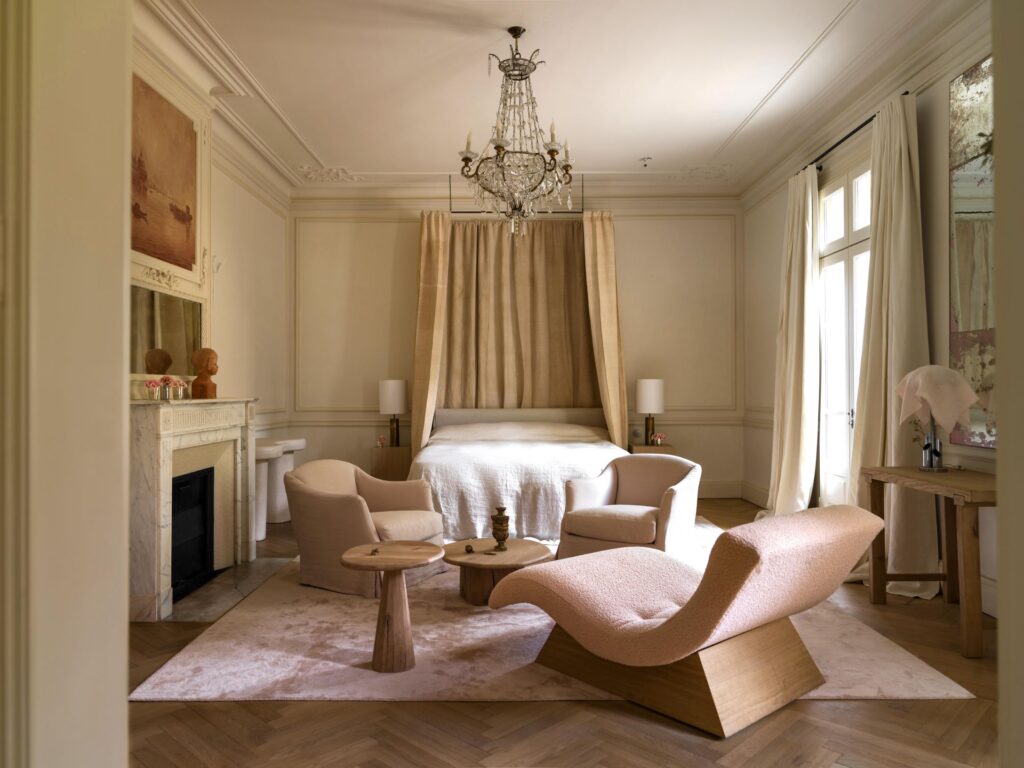
Here, textiles do more than decorate. They shape the space. Drapes, bed canopies, wall panels and screens define areas, soften the acoustics and create privacy. The idea is simple: bring the warmth of a private home into the hotel without overwhelming the original architecture. Fabric becomes a flexible, welcoming architectural tool, with changes that can be reversed.
Colors rooted in the local soil
The shades do not come from an industrial color chart. They come from the soil, literally. Some colors were obtained from plant pigments: grape seeds from the estate, madder root and woad. Blush, coral, apricot, soft blue and pale gray tones evoke the Mediterranean scenery without turning it into a cliché. Alongside them are antique fabrics, including Provençal damasks, Venetian prints and textiles from fashion houses.
Imperfection as a signature
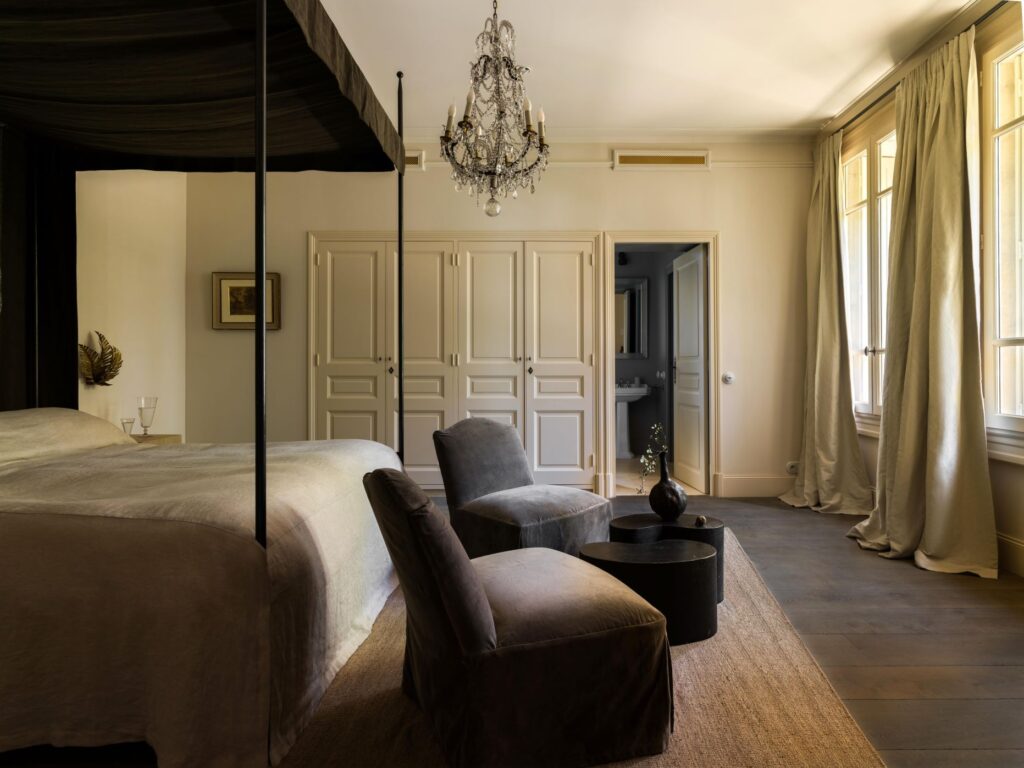
Fragile fabrics are not hidden away. They are repaired and reinforced, sometimes with their imperfections left visible.
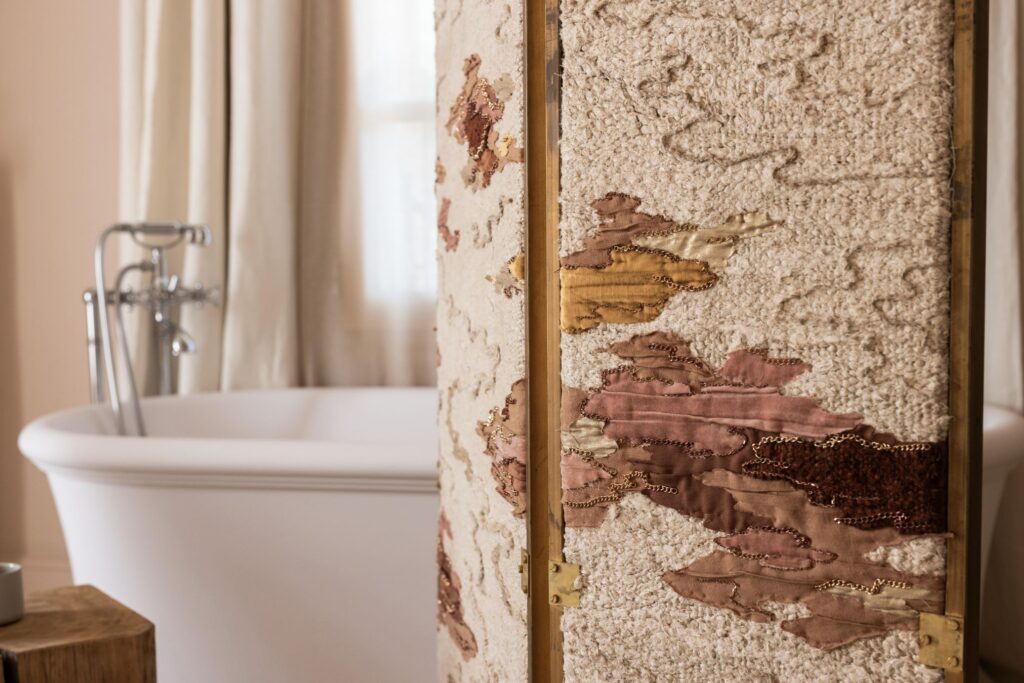
Everything was designed to last and to be used. Covers come off, structures can be taken apart, and fabrics can be cleaned, repaired and dyed again. Nothing is disposable. Traditional European craftsmanship (weaving, embroidery and printing) meets the very practical demands of running a hotel. Luxury is not fragile: it is repairable.
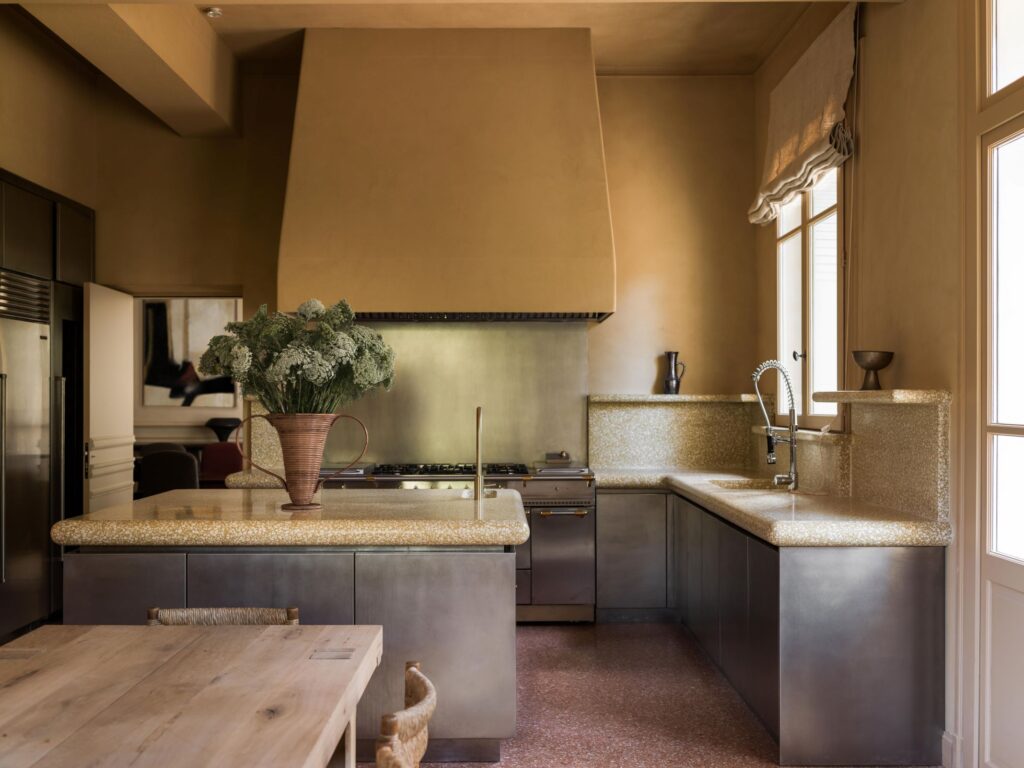
A slower, richer kind of luxury
This project champions a simple idea: sustainable luxury does not mean sacrificing aesthetics. It means choosing materials that age well, gain character over time and hold memories.
 Open Immovlan