

Spring may have you itching to clean your pool, but hold off on starting the robot. These robotic pool cleaner tips explain why.
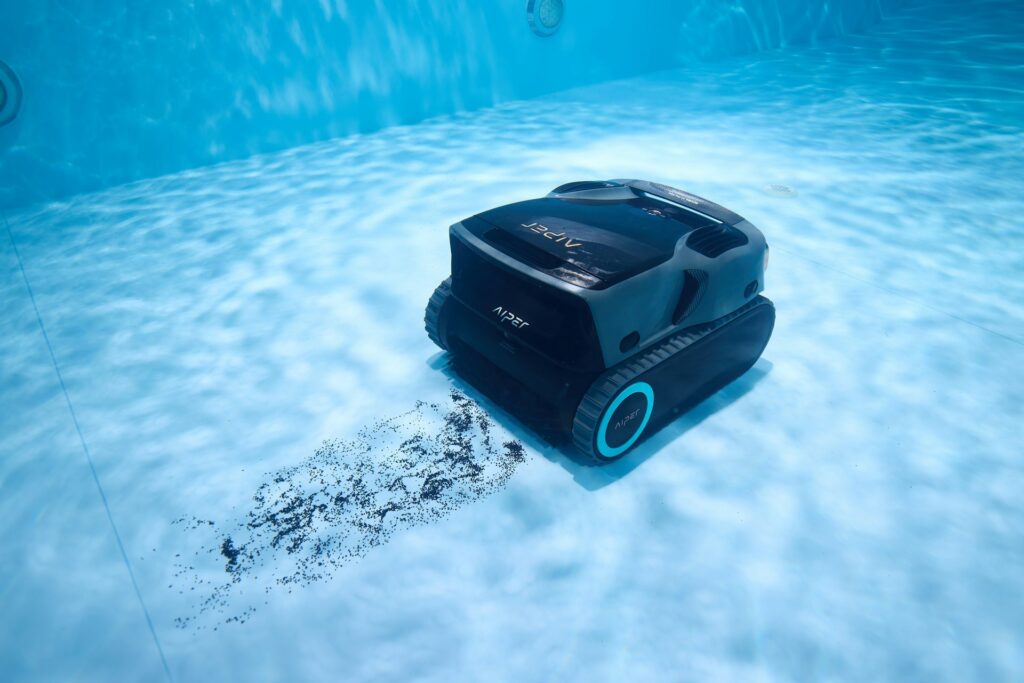
A robotic pool cleaner generally needs a minimum water temperature to work properly. Unfortunately, there is no universal rule: thresholds vary considerably by manufacturer and model. Manufacturers commonly specify minimum temperatures between 10 and 15°C, with 15°C being the most widespread.
Robotic pool cleaner tips: why cold water affects cleaning
The issue is not just whether the robot starts, but whether it cleans properly. Maytronics explains that the colder the water, the less effective the robot becomes, and that cold water can make it harder to climb the walls. The brand specifically notes that climbing performance may suffer below 15°C. Cold can also make plastic parts brittle enough to break, leaving the robot unusable. At the other extreme, manufacturers also advise against using it above 35°C, which, admittedly, is rather rare here in Belgium. The ideal operating range is generally between 20 and 25°C.
What else do manufacturers recommend?
Water temperature is only part of the picture. Instruction manuals also stress water quality. Zodiac/Fluidra, for example, specifies a pH between 6.8 and 7.6, while BWT recommends 7.2 to 7.6 for certain models. Several manuals also warn against running the robot during shock chlorination, as this could damage the equipment or reduce the cleaning cycle’s effectiveness.
What should you check before the first cycle of the season?
It is understandable to want to get everything running again quickly in spring. Before the first use, though, it is worth checking two or three simple things. Start with the condition of the pool: if large debris has accumulated over winter, it is best to remove some of it manually with a net. The robot is there to clean, not to swallow half the garden in one go!
Next, take a look at the robot itself. Its filter, brushes, tracks or impeller should be clean and free of obstructions. A single blocked or dirty component can reduce suction. It can also hinder movement or prevent the robot from climbing properly. For corded models, remember to unwind the cable completely to avoid knots and twists. For cordless models, a full charge before the first run of the season is strongly recommended. Now you are ready to go.
 Open Immovlan