

After the race for pixels (4K, then 8K) and display technologies (OLED, Mini LED, QLED…), manufacturers are now competing on brainpower. Today, a television does more than display an image: it analyzes it, breaks it down and transforms it in real time using artificial intelligence. Deciding whether AI TVs are worth it comes down to what actually changes for you once you pick up the remote.
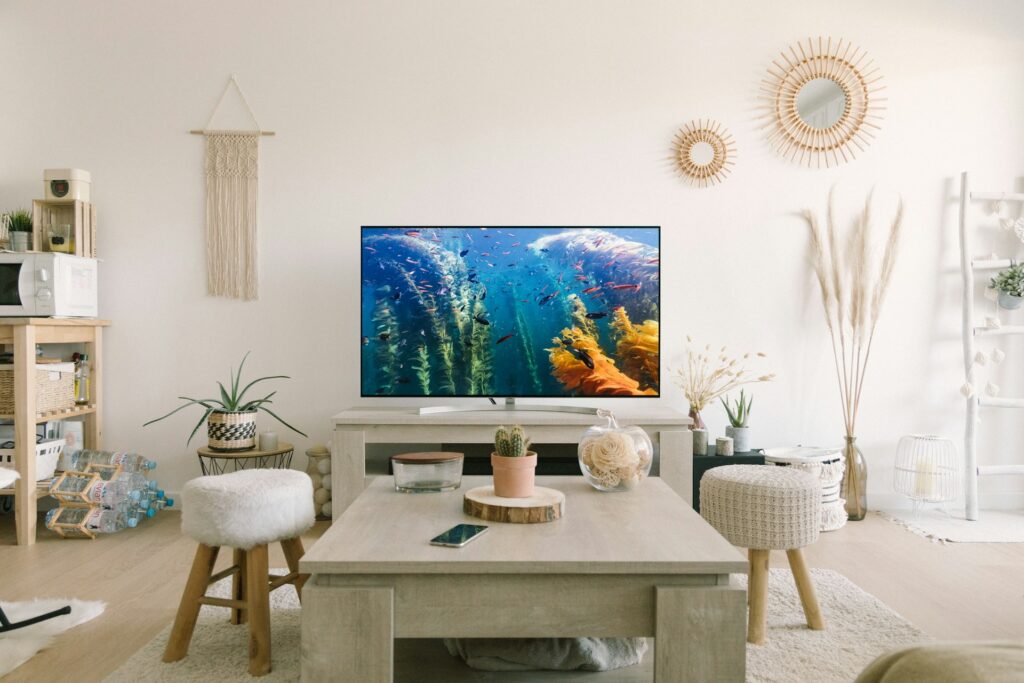
Unlike conversational AI, the “AI” in a television doesn’t write anything or invent content. Its main job is to improve the material coming onto your screen. Here’s what that means in practice.
The real strength: upscaling
This is by far the most convincing use of AI. Our 4K televisions can display fine detail, but much of what we watch is less precise: digital terrestrial TV, catch-up programs, older titles, compressed streams and some online videos. Without good processing, a large screen acts like a magnifying glass for flaws. Here, AI works like an art restorer. Rather than simply stretching the image, it recognizes shapes: it knows what a hair, a wrinkle or a blade of grass looks like. That won’t magically turn an old series into a cinema-quality master, but it can make the picture noticeably more pleasant to watch.
A picture that adapts more readily
Automatic adjustment is another genuine benefit. Some models recognize the type of scene or program and adapt the picture accordingly. For sports, they prioritize making movement easier to follow. For movies, they try to preserve a more natural picture. Others also account for ambient light, keeping the image from looking too dull in daylight or too harsh in the evening. Again, it all depends on the quality of the model and which settings are enabled. It’s no magic wand, but some viewers will appreciate the added comfort.
Sound: most useful for dialogue
It’s the great paradox of modern televisions: screens look better and better, but sound often disappoints because phones and screens are too thin to house good speakers. This is where so-called “AI” processing has a genuinely practical role. Some modes analyze the soundtrack to make voices stand out, maintain a more consistent volume or improve the balance between dialogue, music and effects. Don’t mistake it for a miracle: a good soundbar will still do better.
The “soap opera effect” trap
Not everything works perfectly. Sometimes AI tries too hard: in its efforts to make the picture excessively smooth or sharp, it can give movies a strange, almost “fake” look known as the soap opera effect. The image becomes so smooth that it loses its artistic texture. Fortunately, most manufacturers now let purists adjust the strength of these features or switch them off.
The price: how much extra to expect
You don’t necessarily have to pay much more, but the technology clearly isn’t free. At the time of writing, decent 43-inch 4K “AI” TVs are already available for around €400 to €450. The price depends more on the display technology (OLED, Mini LED, Micro LED…) than on whether the TV has AI.
Are AI TVs worth it for everyday viewing?
A good television still depends first and foremost on its panel, contrast, brightness and video source. AI isn’t essential, but intelligent processing has become a genuinely useful convenience: it corrects some of the flaws in imperfect content and saves you plenty of manual adjustments. AI isn’t the star of the show, but it can be a very capable stagehand behind the scenes.
 Open Immovlan