

After the violent storms of May 30, owners of a house in a flood zone in Belgium face plenty of questions. What happens now?
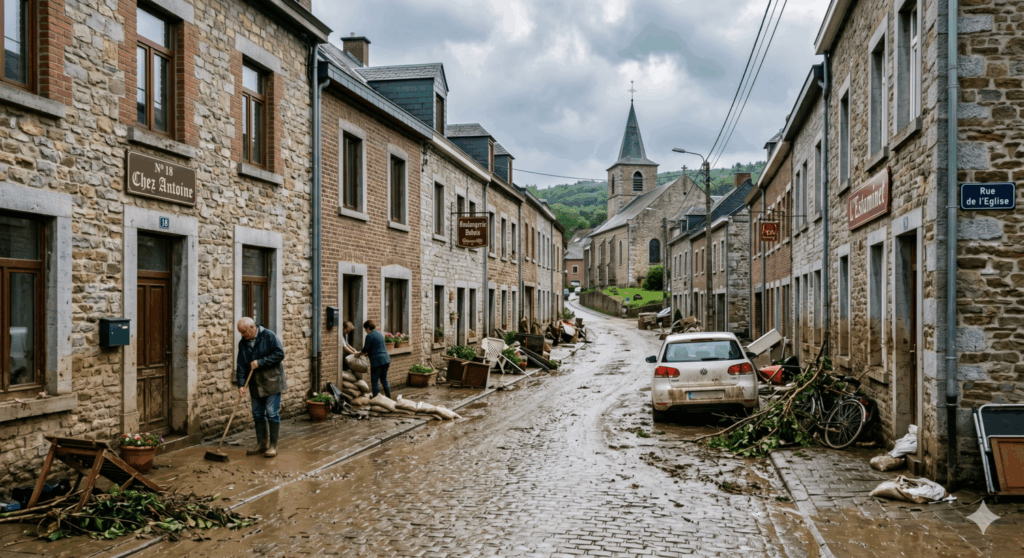
The storms of May 30 were a sad reminder of those in 2021, though without the horrific loss of life. Many properties remain exposed to flooding, and not just those beside rivers.
If your home is in a flood zone, you may be wondering what risks you face, whether you will have to move and whether you can still sell.
Being in a flood zone does not mean your home becomes uninhabitable overnight. It means the property is in an area identified as exposed to a hazard, such as overflowing rivers, surface runoff or water accumulation. In Wallonia, the flood hazard map (carte de l’aléa d’inondation) is the reference used to assess this risk.
When compulsory acquisition is possible
Compulsory acquisition (expropriation) is not automatic. In Belgium, the authorities cannot decide to compulsorily acquire a property simply because a street flooded during a storm one evening. The acquisition must serve a public purpose (utilité publique), follow a procedure and provide fair compensation paid in advance. In Wallonia, the procedure includes an administrative phase, an attempt to agree on a voluntary sale and, if necessary, court proceedings.
In highly exposed areas, public authorities may consider buyouts or redevelopment projects, especially where damage keeps recurring and safety becomes a real concern. These are targeted decisions, not a blanket evacuation of every homeowner living in a blue or red zone on a map.
Selling a house in a flood zone in Belgium
You can sell a house in a flood zone. Notaries must inform prospective buyers about a plot or property’s exposure to flood hazards. This does not prevent a sale, but it does require transparency. The impact on the price can certainly be real: an exposed property that has not been adapted, with a basement that regularly floods, will be harder to sell than a similar house that stays dry.
Buyers will naturally want to know whether water has entered the house, how high it reached, how often it happened and what protection has been installed. Put together a file that reassures buyers: photos of the work, details of backflow valves, raised electrical outlets, a sump pump and water-resistant materials, along with a claims history and certificates.
What your home insurance covers
Home insurance policies in the fire and simple risks category (incendie risques simples) must cover natural disasters, including floods, overflowing public sewers, landslides and earthquakes.
That does not mean every loss will be reimbursed without scrutiny, with a large payout guaranteed. The insurer will examine the policy, the cause of the damage, any exclusions, wear and tear, the deductible and the measures taken after the incident. Direct damage to the home is generally covered; damage made worse by poor maintenance or a failure to act may be disputed.
Be careful, too, with new buildings in areas recognized as potentially flood-prone: in some cases, the insurer may refuse natural disaster coverage for this specific risk. Existing homes generally benefit from stronger protection.
What to do after a major storm
Report the damage to your insurer promptly, take photos before cleaning up, keep invoices, list the affected belongings and do not throw away anything significant without keeping evidence. Also notify the municipality (commune) if the flooding comes from a sewer, a blocked storm drain or heavy surface runoff.
 Open Immovlan