

When you want to cut your energy use, you might first think of insulating your home, replacing window frames or choosing a more efficient heating system. These steps certainly matter, but they are not the only options. Learning how to save hot water, the water you use for washing and cleaning, deserves your attention too.
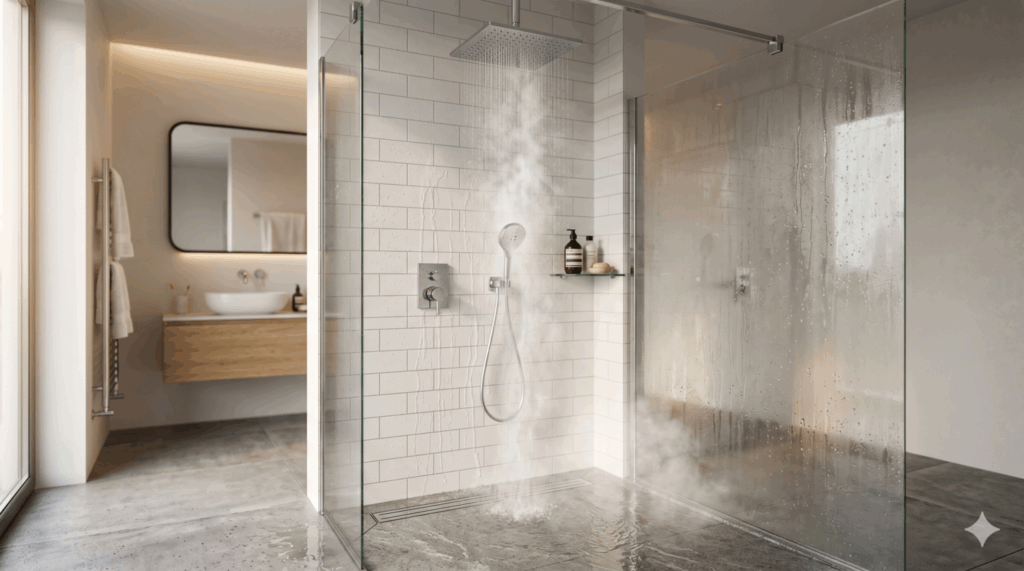
We use hot water every day, sometimes without thinking about it: for showers, washing dishes, cleaning or washing our hands. Heating that water can account for a significant share of a household’s energy budget. On average, a family spends around €250 to €500 a year producing hot water. The good news is that a few simple habits can help reduce this expense, without necessarily spending a lot of money.
Use your boiler when possible
If your system allows it, producing domestic hot water with your central heating boiler is generally more economical than using a conventional electric water heater. Using electricity to heat water directly can cost more, especially if the water heater is old, poorly adjusted or affected by limescale buildup.
The size of your hot water tank matters too. It should match your household’s actual needs. A tank that is too small may run out of hot water, while an oversized tank wastes energy keeping water hot when you do not need it. That is avoidable energy use.
Remember to have your system serviced regularly. A properly adjusted boiler and a water heater in good condition use less energy. In an electric water heater, for example, limescale buildup on the heating element can significantly reduce efficiency. The appliance then has to heat for longer to reach the same temperature, increasing energy use.
Insulate your hot water pipes
It is easy to overlook, but some heat escapes through the pipes before the hot water even reaches the faucet. This is especially true if the pipes run through a basement, garage, ventilated crawl space or unheated room.
The solution is simple: insulate your hot water pipes. Insulating sleeves, often made of foam, fit directly around the pipes. They are inexpensive, straightforward to install and help limit heat loss.
Fix leaks promptly
A hot water leak, even a small one, can become expensive over time. A dripping faucet may seem unimportant, but it can waste several liters of water every day. If that water is hot, you are wasting both water and energy.
A dripping faucet can use around 4 liters of water per hour. Over a day, and then a year, that adds up to an enormous amount. As soon as you spot a leak, it is best to deal with it promptly.
How to save hot water with shorter showers
A bath is enjoyable, but it uses much more hot water than a quick shower. The simplest way to save is to choose short showers instead. A shower lasting a few minutes is generally enough to wash properly while keeping water use down.
You can also install a water-saving showerhead. This reduces the flow without greatly affecting comfort. Another effective tip is to turn off the water while you soap up or apply shampoo. This habit can save several liters of hot water with every shower. Over a week, and then a year, it is easy to imagine the difference.
A thermostatic mixing valve can help too. It lets you reach the right temperature more quickly, without leaving the water running for a long time while you make adjustments.
Use your mixer faucet correctly
The position of your mixer faucet is another detail that is easy to overlook. Many people naturally leave the lever in the middle. In that position, however, the faucet often draws both cold and hot water.
For a quick task, such as rinsing your hands or dampening a sponge, the hot water generally does not have time to reach the faucet. Yet it has already been drawn into the pipes. As a result, the boiler or water heater may switch on unnecessarily.
Make a habit of moving the lever to the cold position before turning on the water, especially for quick tasks. It is a very simple step that avoids heating water for no reason.
Should you use a dishwasher or wash dishes by hand?
Contrary to a common belief, using a fully loaded dishwasher can often be more economical than washing all your dishes by hand, especially if you leave the hot water running throughout the task.
To keep consumption down, run your dishwasher only when it is full and choose the eco cycle when possible. If you wash dishes by hand, plug the sink or use a basin rather than leaving the water running continuously, and rinse quickly.
Get the settings right
Water that is too hot uses more energy and increases the risk of burns. Conversely, water that is too cool can cause hygiene problems in some systems with hot water storage. You need to find the right balance.
When your boiler or water heater is serviced, ask the technician to check the settings. They can tell you whether the temperature is appropriate and whether your system is working properly.
 Open Immovlan