

Removing a partition wall or replacing a roof can expose asbestos in an older building. So can replacing insulation. Asbestos in homes in Brussels is understandably a concern for owners. The region is preparing a digital platform to track it more effectively, but precautions already apply.
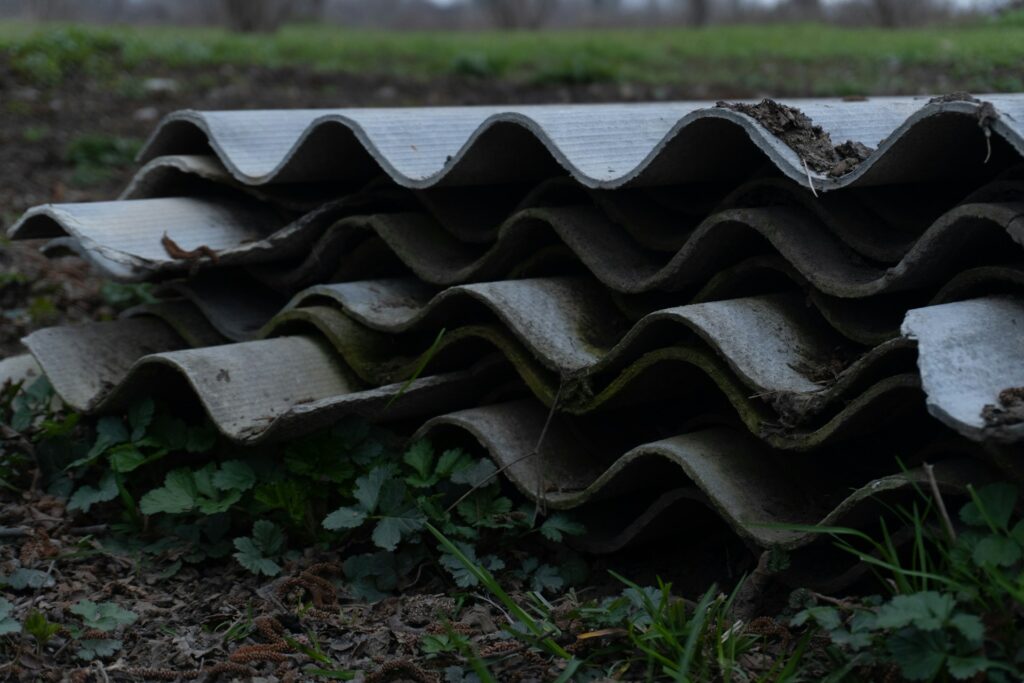
According to estimates from 2017, cited by Secretary of State Ans, 80 to 90% of buildings in Brussels could contain asbestos. This figure covers both private and public buildings.
Where asbestos in homes in Brussels may be found
A quick reminder: asbestos refers to mineral fibers once valued for their durability, particularly their resistance to heat. They were incorporated into many construction materials. In a building built before 1998, asbestos may be present in certain roofing slates, corrugated sheets, partition walls, floor tiles or adhesives, as well as around heating pipes or even in boiler gaskets.
Be careful: you generally cannot tell whether a material contains asbestos just by looking at it. Two very similar sheets can have different compositions. Laboratory analysis is sometimes necessary.
When asbestos can stay in place
Asbestos does not always need to be removed. The danger comes mainly from fibers released into the air and then inhaled, which can cause serious diseases, including cancers. Drilling, sanding, breaking or cutting a material containing asbestos can release these fibers.
An intact material whose fibers remain firmly bound can be left in place and monitored. Removing it without precautions can pose a greater risk than leaving it alone.
So-called “friable” asbestos requires particular care because its fibers come loose more easily. It can be found in some older insulation around pipes, for example. You need to know what you are dealing with and how to handle it.
What is planned for 2027
Brussels is planning a digital platform to register and centralize asbestos inventories (inventaires amiante). These documents identify where asbestos-containing materials are located. The aim is to track buildings more effectively and obtain updated figures.
The platform is expected to launch in 2027. A revision of the regulations is also being prepared, with an initial draft expected early next year. This does not mean that affected owners will have to remove asbestos from their homes as soon as possible.
Before work begins: 4 steps to take
1. Have the relevant materials identified. Brussels Environment states that an asbestos inventory is already mandatory before renovation or demolition work. This survey identifies materials that the work could damage.
2. Leave sampling to a competent person. Avoid breaking off a piece yourself “to check.” A professional can arrange the survey and testing while limiting the spread of fibers.
3. Arrange removal before work begins if necessary. Asbestos-containing materials that the work could damage must be removed beforehand, in accordance with the rules. Depending on the work involved, a declaration or an environmental permit (permis d’environnement) may be necessary.
4. Budget ahead. Ask for a quote detailing the survey and testing, plus asbestos removal and waste disposal if needed. It is best to factor in these costs before setting your renovation schedule.
 Open Immovlan