

Buying a house in Belgium can mean falling for a home, buying it, then discovering defects. Getting compensation from the seller is not always straightforward. Before you commit, a few precautions can reduce the risks, from a thorough inspection to a suspensive condition (condition suspensive) in your offer. Our lawyer explains how.
The seller is not necessarily liable
When you buy a house or apartment from a private seller, the contract almost always states that the seller provides no warranty against visible defects (vices apparents) or hidden defects (vices cachés) in the property.
If a hidden defect emerges after the purchase, you can then hold the seller liable only by proving that they knew about the problem and concealed it from you. That is not always easy to prove.
Your position is slightly stronger when buying from a professional seller. To claim under the warranty, you only need to show that the hidden defect already existed, at least in its early stages, at the time of the sale. However, visible defects do not entitle you to claim under a warranty in this case either.
That makes it worth examining the property closely before you commit.
Buying a house in Belgium: inspect it carefully
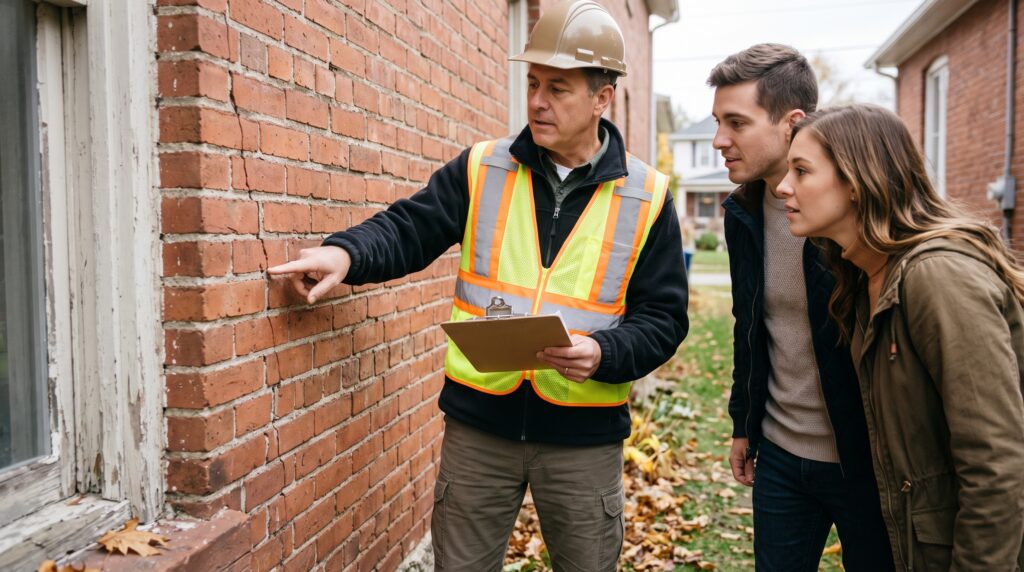
Before considering a purchase or submitting an offer, take the time to inspect the property thoroughly. A quick viewing can give you a feel for the place, but it will not necessarily reveal the building’s actual condition.
To help assess its condition, you can bring along a contractor, an architect or a building expert. Their trained eye may spot problems you would have missed.
The aim is to know as precisely as possible what you are buying before entering into a binding commitment with the seller.
Include a condition if you cannot check everything first
If you want to submit an offer but have not yet been able to examine the property in depth, you can include a suspensive condition tied to a technical inspection.
The principle is simple: you offer to buy on condition that a subsequent expert inspection reveals no significant defects. If the inspection uncovers problems beyond the agreed threshold, the sale does not go ahead.
You therefore need to specify what the inspection must check and the limits within which you are willing to proceed with the purchase. For example, you could include the following clause:
“We make this offer subject to the suspensive condition that a technical inspection of the building, carried out by the expert [name] within 30 calendar days following acceptance of our offer, reveals no defects for which the estimated repair cost exceeds €20,000.”
This wording specifies an expert, a deadline and a financial threshold. The 30 days and €20,000 are examples of terms you can set out in your offer.
 Open Immovlan