

Apartment building emergency repairs in Belgium raise questions about who can make urgent decisions concerning common areas. Can the building manager (syndic) act independently, or must the general meeting of co-owners (assemblée générale des copropriétaires) decide? If a vote is needed, the required majority also needs to be established.
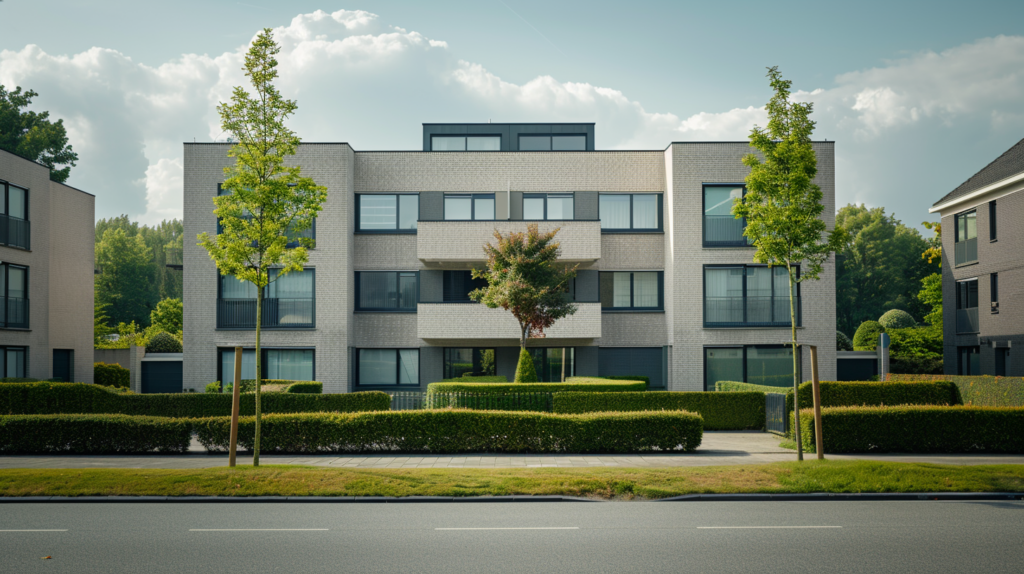
Apartment building emergency repairs in Belgium: the manager’s role
The building manager’s authority is limited to taking protective measures and carrying out interim management relating to the common areas. This includes, for example, urgent maintenance and repairs needed in the building. These are measures that cannot reasonably wait because they are necessary to preserve the common areas or prevent the situation from getting worse.
Outside this specific scope, the building manager cannot make other urgent decisions alone. Even if the situation seems pressing, the manager must stay within the limits of their authority. Any decision that goes beyond protective measures or interim management must, in principle, be referred to the appropriate decision-making body of the co-ownership (copropriété).
The general meeting of co-owners
For work that falls outside the building manager’s authority, the general meeting of co-owners can make urgent decisions. The general meeting can also grant a power of attorney (procuration), for example to the co-ownership council (conseil de copropriété), allowing it to decide on certain specified works. However, this delegation must cover specific decisions and remain within the framework set by the co-owners.
If an urgent decision is needed in the interests of the co-ownership and cannot wait until the co-owners’ regular annual general meeting, the building manager can call an extraordinary general meeting (assemblée générale extraordinaire). The manager can do so on their own initiative when the urgency justifies it. They may also be called upon to do so at the request of one or more co-owners who together hold at least one-fifth of the shares in the common areas.
The required majority depends on the nature of the work. Depending on the type of decision, the general meeting must approve it either by an absolute majority of votes, meaning 50% plus one vote, or by a two-thirds majority. You therefore always need to establish exactly what work is involved before determining the majority required.
Making a decision in writing
For urgent decisions, the law also allows co-owners to decide in writing without calling a general meeting of the association of co-owners (association des copropriétaires). This procedure can be useful when the situation requires a quick response and a meeting cannot be organized in time.
For a written decision to be valid, however, all co-owners must agree. They must accept both the procedure, meaning making the decision in writing, and the decision itself. In other words, their agreement must cover both how the decision is made and what is decided. Without unanimity, this option cannot be used.
 Open Immovlan