

Demolition is almost always an unavoidable part of renovating a house. It lets you make a fresh start, but the work is far more complex than it looks. If you do not plan properly, common mistakes can have costly or even dangerous consequences.
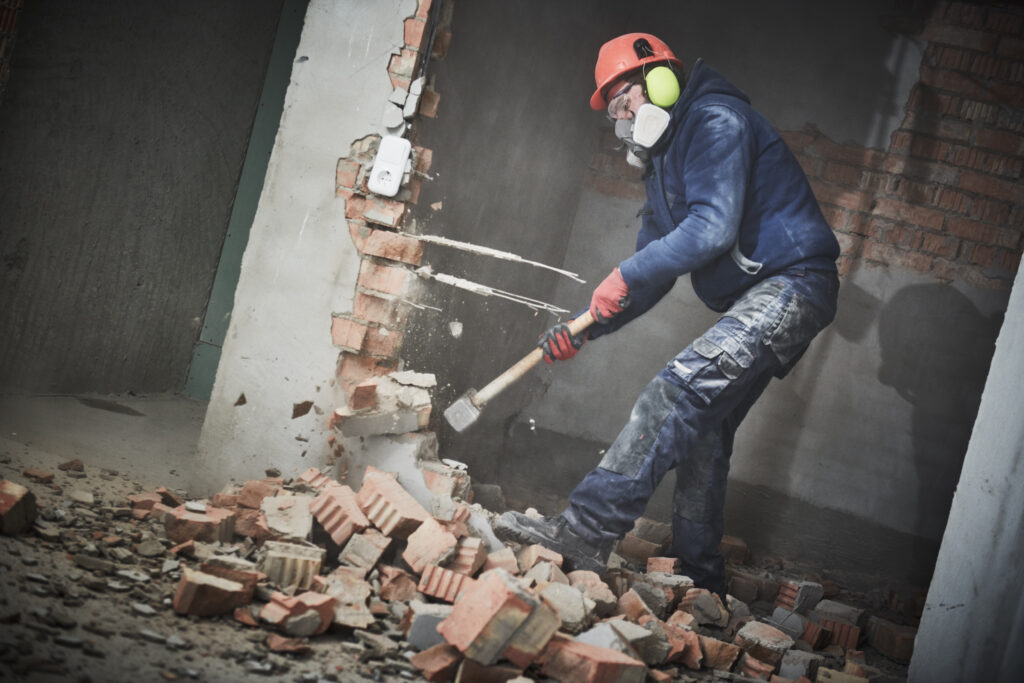
Our home renovation demolition tips cover the most common pitfalls to avoid when renovating in Belgium, so you can work safely without nasty surprises.
1. Home renovation demolition tips: don’t stop too soon
Limiting demolition to save time or cut costs is a common mistake. Keeping worn-out components can quickly prove to be a false economy.
Old plumbing pipes, heating pipes and outdated electrical conduits are often at the end of their useful life. Leaving them in place greatly increases the risk of leaks, breakdowns or water damage, sometimes just after you have finished decorating.
Our advice: replace anything likely to cause problems in the short or medium term. This will save you from having to break open walls and floors again in a few years and give you long-term peace of mind.
2. Demolishing walls without checking whether they are load-bearing
Never demolish a wall without checking it first. Before starting, you need to establish whether it is a load-bearing wall. These walls play a key role in your home’s structure and stability. Removing or altering one without proper precautions can cause sagging, major cracks or even a risk of collapse.
If your project involves removing a load-bearing wall, you will generally need to:
- apply for a planning permit (permis d’urbanisme),
- hire an architect or engineer,
- plan for structural reinforcement, such as a beam or lintel.
We strongly recommend hiring a team of reputable professionals to handle this work.
3. Removing a chimney without taking precautions
Many people want to remove an old chimney during renovation, either in the living room or a bedroom. Yet this work is more delicate than it appears. Some chimneys are not simply decorative: they can also provide structural support. Removing them without assessing their role first can weaken the whole building.
If you have any doubts, have a professional examine the chimney. Carry out demolition as gradually as possible and plan for the risk of cracks appearing in adjacent walls after removal. With chimneys, leaving the work to professionals is often the best option.
4. Neglecting rubble and hazardous materials
Never take handling rubble lightly, especially in older houses. These often contain asbestos, a material that, as you may know, is now banned because it is highly carcinogenic. Asbestos can be hidden in roofing slates and old insulation, as well as certain ducts and panels. Never handle these materials without protection. Have an asbestos survey (diagnostic amiante) carried out before work begins, and entrust their removal to an approved company. This protects both your health and that of other people on site.
 Open Immovlan