

Buying a second home in Spain takes more than the advertised price. To avoid stretching your finances too far, here is the real bill, tip not included.
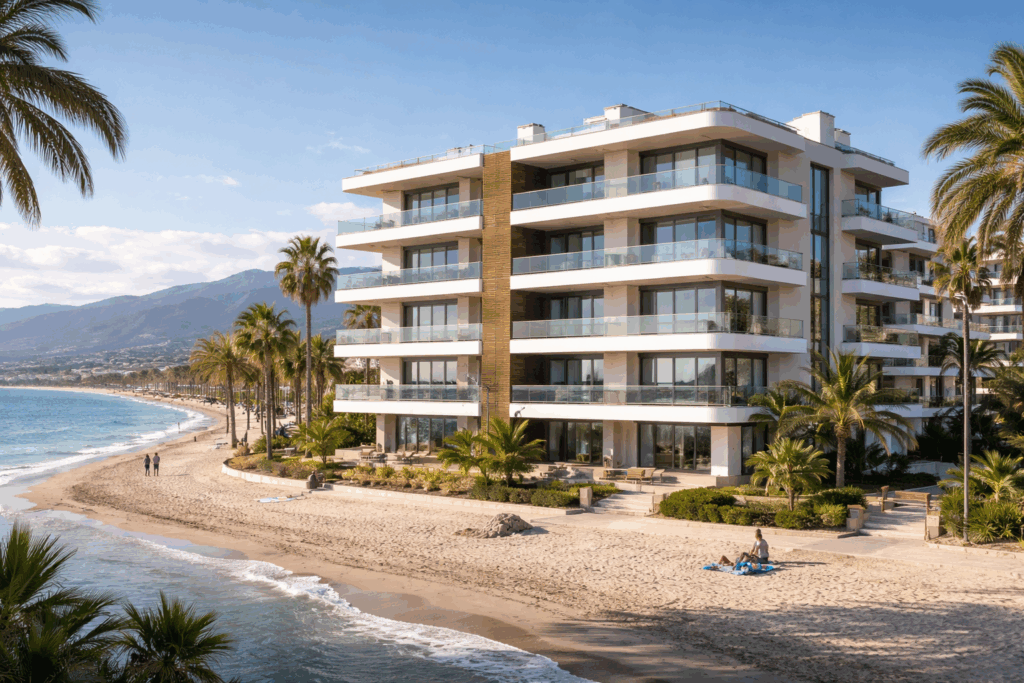
Belgians have a well-known love of property, and increasingly they are looking for it in the sun: nearly a quarter of the 247,200 Belgians who own property abroad have chosen Spain. But there can be quite a gap between dreaming of a villa with a pool and making the bank transfer.
Buying a second home in Spain: purchase prices
As on a wine list, prices can vary threefold depending on what you choose. Your budget will shape your choice of location. If you have your sights set on the Balearic Islands, expect a fairly steep average of around €3,907/m². At the other end of the scale, the Murcia region has an average price of €1,292/m². Malaga and the Costa del Sol sit between the two, at around €2,979/m². So the first consideration is location: your budget will often choose the region for you.
How much tax do I pay if I buy a house in Spain?
You need to add purchase costs, generally totaling between 11% and 14% of the property’s price. For a new-build property, VAT (IVA) is 10%. For an existing property, transfer tax (ITP) applies instead, with rates varying by region: 10% in Valencia, but 7% in Andalusia.
A lawyer rather than a notary
A common first-time buyer’s mistake is assuming that the system works as it does in Belgium. One major distinction: in Spain, the notary is not the “gatekeeper.” Unlike in Belgium, the notary has no obligation to investigate the property’s planning status or debts. A lawyer prepares the transaction and takes the lead. The first useful document to arrange is therefore a power of attorney for a specialist law firm, which will act at every stage and save you numerous costly trips back and forth.
Before you even get to the property itself, you will need the NIE, a foreigner’s identification number. This is essential for buying property, opening a bank account or even paying your taxes.
How does the purchase process work?
It often starts with a reservation contract, which takes your chosen property off the market in exchange for a small deposit while you prepare the next steps. Then comes the sales agreement (compromis de vente), known in Spain as the contrato de arras. Unlike in Belgium, this is a private document that does not require a notary’s involvement. This is where the upfront payment becomes substantial: you generally need to pay 10% of the price for an existing property, often rising to 30% or 40% for a new build. The notarized deed comes only at the very end to formalize the sale.
Financing your purchase
Spanish banks are less willing to lend to non-residents. They generally cover 60 to 70% of the value, often using the lower of the purchase price and the appraisal. You therefore need a solid financial footing and around 40% of the total amount from your own funds to cover the down payment and purchase costs.
Costs after you buy
The spending does not stop once you own the property. If it is not new, you may need a renovation budget to meet energy standards. If it is new, you will need to furnish it: allow €8,000 to €12,000 for a complete apartment. Add co-ownership fees (charges de copropriété), pool maintenance if applicable, and non-resident income tax (IRNR), which is payable even if the property stays empty.
Finding an intermediary
Ideally, find an intermediary who can handle all the procedures or at least guide you through them, so you can follow the steps in the right order and invest with peace of mind. A family friend compares these intermediaries to mountain guides: they cannot make the slope less steep, but they can stop you from falling into the ravine.
 Open Immovlan