

Draining pasta, rice or potatoes is a routine kitchen task. Yet it raises an issue for kitchen drain maintenance: the cooking water you pour down the sink without a second thought could seriously damage your pipes, even if everything has seemed fine for years.
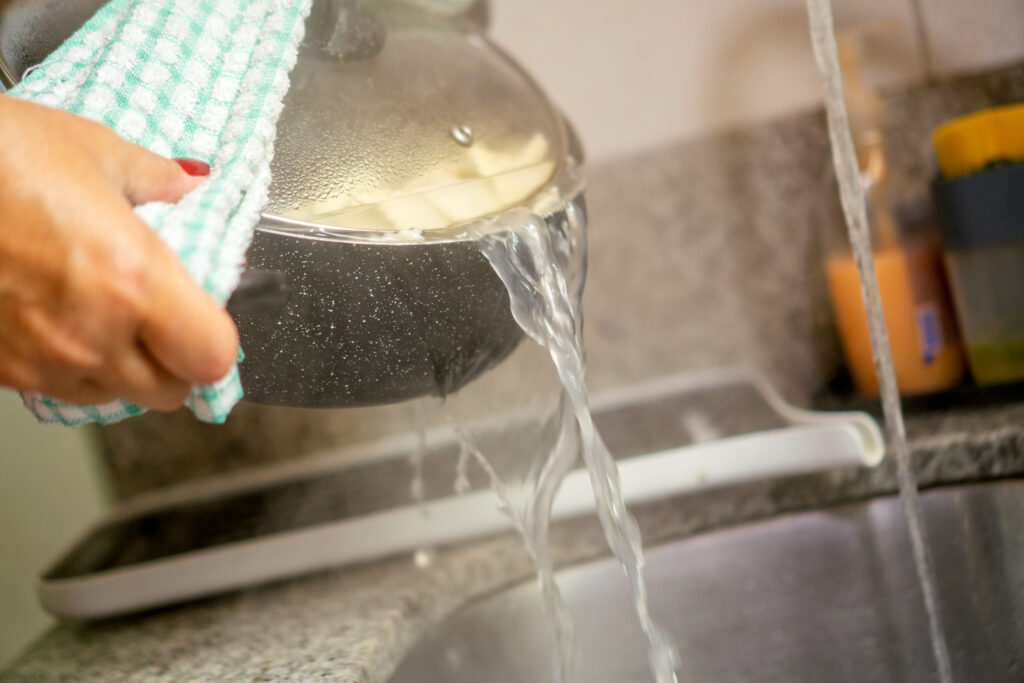
Many people believe boiling water acts as a natural cleaner, dissolving grease, disinfecting pipes and preventing clogs. Plumbing professionals take a much more nuanced view. According to Sudinfo and several industry experts, this habit can cause premature wear in plumbing systems, especially in newer homes.
Can boiling water damage drain pipes?
Most homes today have PVC pipes, a reliable material that is sensitive to high temperatures. Above 60 °C, it begins to soften. Pasta cooking water, meanwhile, is close to 100 °C.
Over time, pipes can warp, weaken or even crack. Copper and steel pipes in older homes are not entirely safe either: repeated thermal shocks put strain on joints and soldered connections.
The sink itself can suffer too. Ceramic or porcelain sinks can react badly to temperature changes and eventually crack without warning.
Starch: an unwelcome housemate
Another often underestimated problem is starch. Found in pasta, rice and potatoes, it does not disappear in hot water. Instead, heat makes it sticky, allowing it to coat the inside of pipes and cling to even the smallest traces of grease. Gradually, these deposits form particularly stubborn clogs that are much harder to remove than a simple clump of hair.
Grease melts, but it does not go away
Contrary to popular belief, boiling water does not “clean” pipes. It does melt grease, but the grease simply moves farther along the drainage system before solidifying again. The result is a denser clog farther down the pipe, which often costs more to clear.
Kitchen drain maintenance: a simple habit to adopt
The solution is simple and requires neither sophisticated equipment nor plumbing skills:
- Pour the cooking water into a heat-resistant container
- Let it cool for a few minutes
- Only then pour it down the sink or toilet
As a bonus, this water can also be reused to water certain plants, provided it has cooled and is unsalted. You can also use it for cleaning or even killing weeds.
 Open Immovlan