

Our lawyer explains garden maintenance laws in Belgium. As a homeowner, do you have to mow your lawn regularly and remove weeds? Can your neighbor make you prune branches that overhang their property? And what can your landlord require if you rent your home?
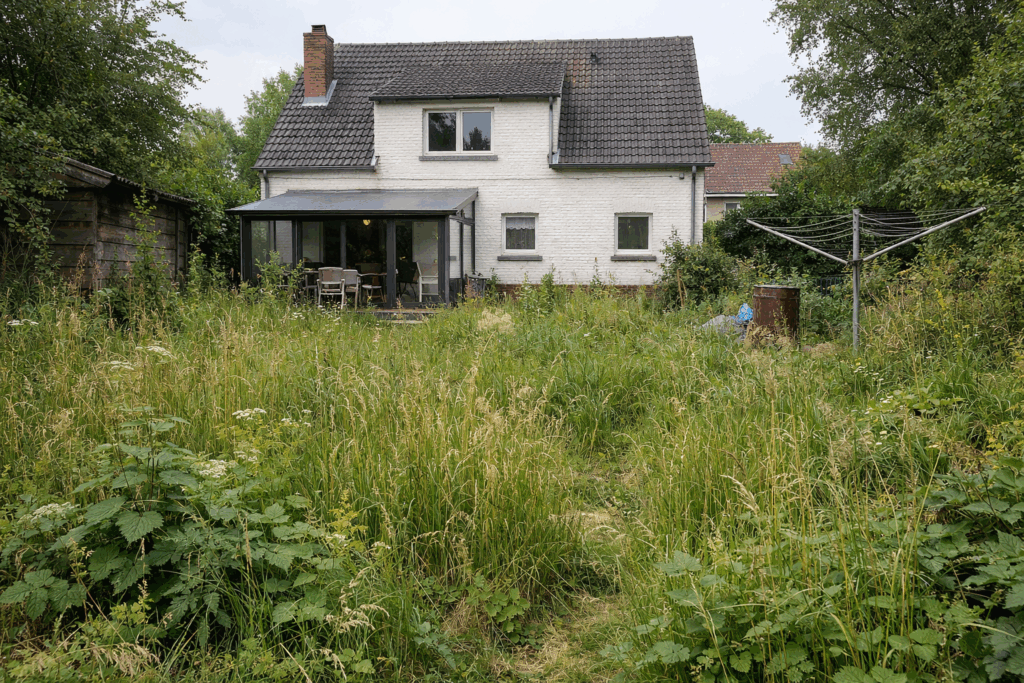
Garden maintenance laws in Belgium: no general duty
Legally, you do not have to maintain your garden regularly. There are, however, some exceptions. Municipal regulations may include requirements for garden maintenance and controlling the spread of weeds. If you want to let your garden grow wild, it is worth checking those rules carefully.
Nor can a lack of garden maintenance cause an excessive nuisance for your neighbors. In other words, even without a general duty to maintain your garden, you cannot leave your land in a condition that causes an abnormal level of disturbance to the neighborhood. Examples include tall grass that attracts pests or invasive plants that spread extensively onto neighboring properties.
What if you are a tenant?
Your landlord, on the other hand, can require you to maintain the garden of the home you rent.
Tenancy legislation is a regional responsibility. This means the applicable rules vary depending on whether the rental property is in the Flemish Region, the Walloon Region or the Brussels-Capital Region. Each region has drawn up lists specifying which maintenance tasks in the home and garden are the tenant’s responsibility and which remain the landlord’s.
In Flanders, for example, the rules require tenants to mow their lawn. They must also prune trees and shrubs properly. This means regular, careful maintenance in line with good horticultural practices.
In Wallonia and Brussels, tenants must also carry out routine garden maintenance. However, landlords must take the necessary steps to have dangerous trees, such as rotten trees, removed and ensure that tall trees are pruned. This division of responsibilities distinguishes routine maintenance, which falls to the tenant, from more substantial or risky work, which falls to the landlord.
Overhanging branches
If branches from your trees extend beyond the boundary between your properties, your neighbor can ask you to prune them. In principle, this request must give you the opportunity to take action yourself.
If you do not act on that request, your neighbor can send you a formal notice (mise en demeure) by registered mail requiring you to carry out the necessary work. A formal notice is an important step because it gives you a final deadline to act.
If you still take no action despite this formal notice, your neighbor is entitled to cut the branches themselves (or have them cut) at your expense. It is therefore best to respond promptly to avoid additional costs and potential disputes with your neighbors.
 Open Immovlan