

I’m speaking from experience here. Damp can be a real scourge, spreading through a home and proving very difficult to get rid of. Knowing how to spot signs of damp in a house can help you judge whether the property you’ve fallen for is genuinely sound.
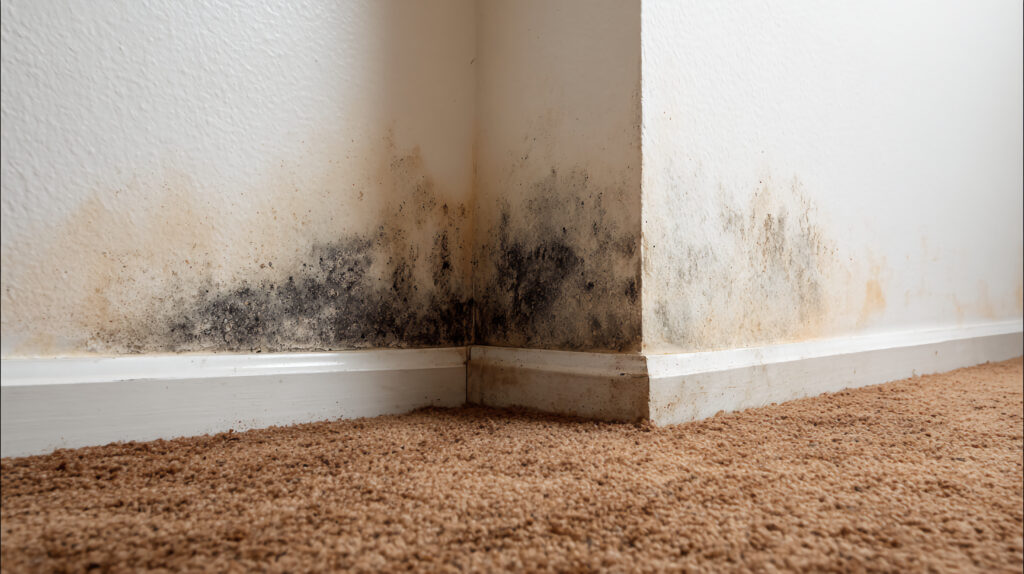
The house looked flawless, completely renovated. We fell for it. Then, during the visit on the day we were due to sign the deed, disaster: large damp patches on the freshly painted walls. I promise this is not a story invented by AI (ugh). It really happened. Before committing to a purchase, it pays to know where to look and which warning signs to take seriously.
1. Signs of damp in a house: black spots in corners and around windows
One of the first warning signs is, of course, black spots. They often appear in room corners, behind curtains, near window frames or in places with poor air circulation. In many cases, they indicate mold caused by excess moisture and insufficient ventilation.
Pay particular attention to the silicone seals around windows. Mold takes hold there easily, especially in damp or poorly ventilated rooms. These seals are difficult to clean thoroughly, so they often reveal more than freshly painted walls. Even if someone has cleaned away some of the marks before your viewing, remaining traces, discoloration or an uneven appearance can still betray a deeper problem.
If poor ventilation is the only cause, as discussed below, relatively straightforward solutions are available. One is installing mechanical ventilation (ventilation mécanique contrôlée, VMC). For a small property, it probably costs less than you might expect: between €1,000 and €3,000 for a studio or small apartment. Small properties and/or insulated properties (guess how I know) are often the first to suffer from this type of damp. You can, of course, negotiate the installation of mechanical ventilation as part of the purchase. But be careful: there may be other causes.
2. Look behind furniture, not just at what is visible
During a viewing, it is tempting to focus on the room as a whole. Yet the most revealing areas are often those you do not notice at first glance. Furniture placed against walls can hide damp patches, particularly in bedrooms, living rooms or rooms with little heating. Air circulates less freely behind furniture, allowing moisture to accumulate and encouraging mold to grow.
Try to look behind a wardrobe, sofa or chest of drawers, especially if it sits right against an exterior wall. Check the baseboards too. Warping, separation from the wall or stains are never good signs. They can also give you considerable room to negotiate.
3. Examine walls and ceilings carefully
Walls and ceilings are among the most revealing surfaces. They are often the first places where damp leaves visible traces. Water rings, blistering paint, uneven color or a recently repainted patch should put you on alert.
A property that has just been freshened up does not necessarily have a problem. But a fresh coat of paint can sometimes conceal defects. Look for differences in shade, areas that still look “new” compared with the rest of the wall, or an unusual finish.
Fungal growth, including mold, can also appear higher up, particularly in ceiling corners, above windows or in rooms with water fixtures. Take the time to look up during your viewing, including into the corners.
4. Inspect the basement with extra care
If the property has a basement, always ask to see it. It is often one of the best places to detect a structural damp problem. A musty smell, walls that feel damp, whitish marks, a wet floor or dark patches are all clues you should not ignore.
Be especially cautious if there is no sump pump, particularly if the property is in an area with damp ground or the basement looks poorly maintained. Rising damp or water infiltration may be more common there than you imagine.
Even if you do not plan to use the basement every day, a problem there can affect the rest of the house. A damp basement can make the whole home feel damp and make it harder to keep building materials in good condition.
5. Check wall finishes and less obvious signs
Not every damp problem produces large, obvious stains. Sometimes the signs are subtler. Peeling wallpaper, flaking paint, a wall that seems crumbly or a whitish deposit on the surface should catch your attention.
This deposit, often powdery, may come from mineral salts left behind as water evaporates. It is a classic sign of moisture in walls and always deserves closer investigation.
If possible, run your hand over some surfaces too. An unusually cold or slightly damp wall may reveal a condensation problem or poor insulation. These are not necessarily insurmountable defects, but it is better to identify them before buying than after moving in.
A word of caution
Poor ventilation often causes damp in homes today: people think about insulation, but not necessarily ventilation. However, other causes are possible, including rising damp, a leaking pipe, water infiltration or a blocked gutter. The possible causes are endless, and pinpointing the source can be very difficult, even with help from recognized specialists.
What happened in my own home
If you see lots of damp patches, walk away. In my case, the house was very small and fully renovated, but there were numerous damp patches and just as many causes: faulty drainage, porous masonry, inadequate ventilation, rising damp and more. It took 3 to 4 years to get the problem under control, with all the financial damage and legal trouble you can imagine. It was an ordeal. Never again! Dealing with well-regarded specialists who blamed one another, seemed at a loss, failed to understand the problem and acted in bad faith was quite a lesson.
A renovated house is not necessarily free of defects
A freshly renovated home can be very appealing. Renovation is often a real advantage, but it should not make you less vigilant. The work may have been done to modernize the property and increase its value, but it may also have served to hide certain problems. That does not mean you need to distrust everything. Still, it helps to look closely at the details and ask specific questions rather than letting an attractive presentation alone reassure you.
If you have doubts, it may be worth asking a building professional or an expert for advice before signing. An experienced eye can spot in minutes what a buyer may struggle to notice during an ordinary viewing. If you are buying with the intention of renting the property out, consider installing mechanical ventilation if it is not already in place. Unfortunately, you will not control whether it is used properly, but at least you cannot be blamed for failing to install it. It can also help the property’s EPC (certificat PEB) rating, and therefore its value.
 Open Immovlan