

Solar panel hail damage is not always obvious. After a storm, your panels deserve a quick check, even when everything looks intact!
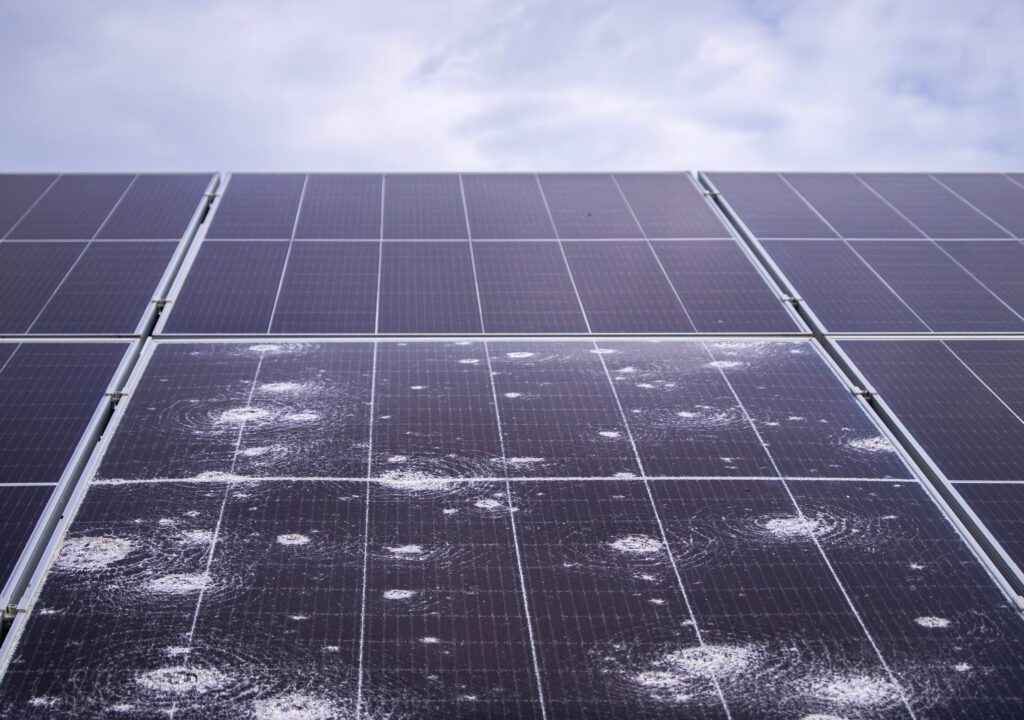
After a major storm, you probably check the car, patio and Velux windows, perhaps even the vegetable garden if you can bear to look. Your solar panels deserve attention too. Following the hailstorms in Wallonia, some may have taken quite a beating. The trouble is that damage to solar panels is not always visible from the sidewalk. Reassuringly, photovoltaic modules are designed to withstand bad weather. But standard tests do not always cover the most violent storms.
What standard hail tests cover
The international standard IEC 61215, used to test the durability of crystalline photovoltaic panels, includes impacts from 25 mm hailstones fired at 83 km/h. That is already a serious test. But hailstones measuring 4 or 5 centimeters are in a different league.
According to Sudinfo, the Institut Pierre-Simon Laplace says a 4 cm hailstone can fall at around 120 km/h. Panels can therefore face much harder impacts than those covered by standard tests. Some brands carry out more demanding tests, but these are neither systematic nor governed by a single standard. As a result, a panel can emerge from a storm with microcracks that are invisible from a distance.
Why solar panel hail damage can stay hidden
Microcracks can affect the solar cells enclosed between the glass and the back of the panel without causing visible damage. At first, the owner may simply notice a drop in output.
Over time, however, these cracks can let moisture in and encourage corrosion, making the damage worse. In the most serious cases, they can also create hot spots, areas of localized overheating that damage the panel further.
Régis François, spokesperson for BeProsumer, sums up the risk in Sudinfo: “Over time, this overheating can damage the panel and increase the risk of fire.”
How to check solar panels after hail
There is no need to panic at every shower, but it pays to be vigilant after large hailstones have fallen. Start by visually inspecting the installation from a safe place. Climbing onto the roof yourself is certainly not a good idea.
Look for visible signs: unusual reflections, marks on the glass, a darker area, a crack or a panel that looks different from the others. Then monitor electricity production over the following days and weeks. An unusual drop, especially with comparable sunshine, can be a warning sign.
If you have any doubts, the safest option is to call a professional. A specialist inspection can detect defects invisible to the naked eye.
Check your insurance coverage
Another key point is fire insurance (assurance incendie). Many owners assume their panels are automatically covered. Sometimes they are. Sometimes they are not covered at all.
Some insurers automatically include photovoltaic panels, while others require you to explicitly declare the installation. With some insurers, this declaration can lead to a higher premium. Read your policy again and contact your broker or insurer. Make sure you have written confirmation that the installation is covered.
Record the damage and report it
If you find damage, put together a complete file. Photos of the panels and roof, any debris, the date and time of the storm, and production readings from before and after can all help. Some insurers even recommend photographing hailstones alongside a reference object to estimate their size.
As photovoltaic installations become more common in Belgium and weather events grow more violent, this type of damage may become less unusual. Solar panels remain an excellent investment, but they are not invincible.
 Open Immovlan