

When it comes to declaring home renovations in Belgium, repainting your living room will not worry the tax authorities. Converting an attic into a bedroom, adding a veranda or installing a swimming pool, however, can be a different matter!
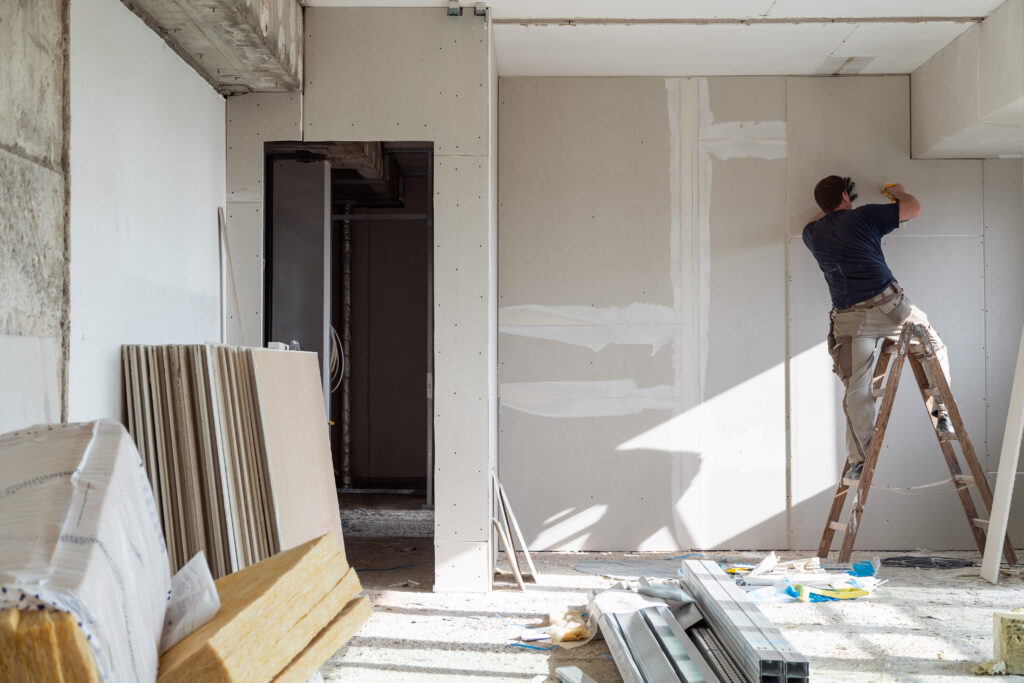
Certain renovation works must be declared to the Federal Public Service Finance (SPF Finances) if they could affect your property’s cadastral income (revenu cadastral). This theoretical amount is used, among other things, to calculate property tax (précompte immobilier). And the administration seems determined to remind “forgetful” owners of this rule.
Since a new penalty system was introduced in 2024, owners have already received 719 administrative fines for undeclared works or late declarations. The total exceeds €1.1 million, according to figures from FPS Finance obtained by De Tijd and reported by Batibouw. Fines range from €250 to €3,000, with an average of €1,519.
Declaring home renovations in Belgium: the 30-day deadline
When a house is built or altered, the owner must notify FPS Finance within 30 days of the work being completed. For alterations, the existing cadastral income may then be revised.
This does not apply to every small weekend DIY job. The administration mainly targets changes that improve comfort or increase the property’s rental value, such as an extension, fitting out a floor, adding a bathroom, central heating or a swimming pool, or, of course, a change of use. In short, work that genuinely transforms the home. Notaries also remind owners that works likely to increase cadastral income must be declared voluntarily within 30 days.
Municipalities take a more active role
Another new development is the more active role of municipalities. Some work with the General Administration of Patrimonial Documentation (Administration générale de la Documentation patrimoniale) to identify homes whose cadastral records look distinctly outdated. A house officially recorded as having no bathroom or central heating, but advertised for sale online with photos of a walk-in shower and a designer stove, will eventually attract attention. Property listings, administrative records and site visits can all provide clues.
The stated aim is tax fairness: two comparable houses should not be taxed very differently simply because one owner reported improvements and the other did not. In Belgium, cadastral income still rests on a reference value dating back to 1975. So the records are not always particularly up to date.
Better to put things right than cross your fingers
The tax authorities say fines do not arrive without warning: letters, requests for information and opportunities to put things right generally come before a penalty. Frankly, a voluntary declaration will take less time than an appeal and cost less than a fine.
 Open Immovlan