

Installing solar window film in Belgium might seem like a small improvement that is nobody else’s business. But that depends on the circumstances.
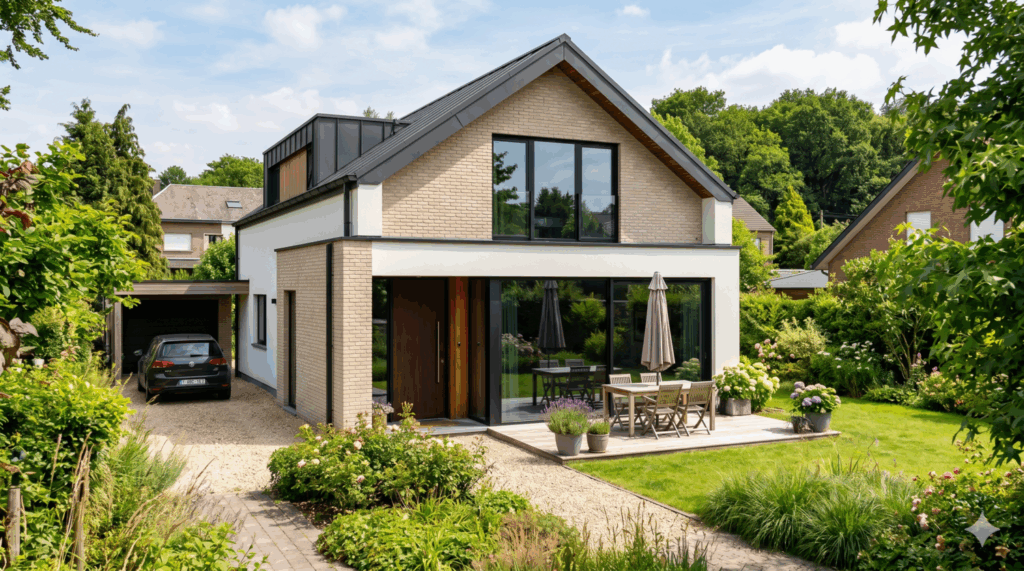
Recent heat waves have prompted many of you to look into solar window films. The technology has certainly come a long way: these films still let light through while keeping the heat outside! The results sound impressive, but there is also the question of legality. Many specialists tell us they are legal. Still, we took a closer look at the legislation, because there is no single answer.
First, a reminder: in Belgium, any change to the external appearance of a building raises the question of whether a planning permit (permis d’urbanisme) is needed. The answer mainly depends on three factors: the region, visibility from public spaces and the film’s visual impact.
In Wallonia, the municipality decides
Solar film applied to the inside of a window can be almost invisible. But some versions are highly reflective, smoke-tinted, mirrored, opaque or colored. These change the appearance of the facade, which is where planning rules may come into play.
In Wallonia, you must check with your municipal planning department (service urbanisme) before starting work, even if you genuinely believe no permission is needed. You will not necessarily get the same answer from one municipality to another.
Brussels: take care with visible facades
In Brussels, the approach is fairly clear: exterior work may be exempt from a permit under certain conditions. For example, replacing window frames is exempt only if their original shapes are retained and the building’s architectural appearance is unchanged. Although solar film is not a window frame, the same reasoning applies: what matters is its visible effect on the facade.
Facades visible from the street are particularly sensitive. Altering window frames may require a permit. The good news is that an exemption from the requirement to use an architect is available if the work raises no structural stability issues. It is therefore wise to be cautious about mirrored solar window film or heavily tinted film on a front facade. Even if the glass stays the same, the building’s appearance changes. In cities, especially in neighborhoods with heritage value, municipalities sometimes monitor the visual harmony of facades very closely.
The situation is even more sensitive if the building is listed (classé), included on a heritage safeguard list (liste de sauvegarde) or located within a heritage protection area. In these circumstances, a permit will probably be necessary.
Flanders: the same approach
In Flanders, the relevant term is environment and planning permit (omgevingsvergunning). The Vlaanderen.be portal states that you must check before starting work whether permission is needed, particularly when changing a building’s appearance. Installing solar film can indeed have that effect.
What about co-ownership (copropriété)?
In an apartment building, the windows may be privately owned, but the facade’s appearance is generally a shared concern. Here too, you may need approval from the co-ownership to preserve the building’s visual harmony.
Solar window film in Belgium: when a permit may be needed
In most cases, discreet solar window film applied inside and barely visible from public spaces should not require a permit. The situation is very different, however, if the film noticeably changes the overall appearance of the front facade and the building is historic or listed.
The practical rule is simple: the more visible the film is from the street, the more you need to check. Checking becomes all the more necessary if the building is older, protected or in a neighborhood subject to specific regulations.
 Open Immovlan